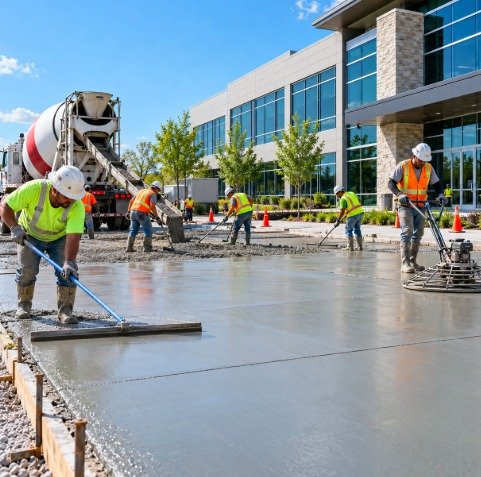
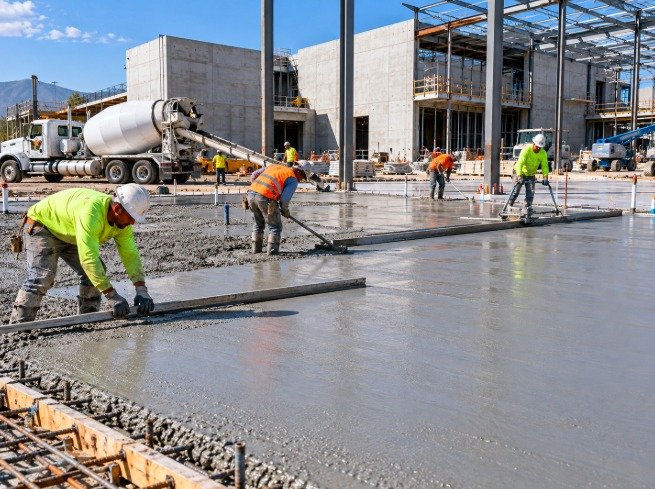
Crew placing and power troweling a large commercial concrete slab outside an office building

Commercial Concrete Services in Los Angeles

Installation, repair, and replacement for parking lots, sidewalks, loading docks, warehouse floors, retail, restaurant, office, apartment, HOA, and municipal properties.

Commercial Concrete Services

Concrete Built for Business Traffic

Commercial concrete plays an important role in the safety, accessibility, appearance, and daily operation of business properties. From parking lots and sidewalks to warehouse floors, loading docks, equipment pads, and structural slabs, commercial concrete surfaces need to handle regular traffic, heavy loads, weather exposure, and frequent use.

Every commercial property has different needs, so concrete work should be planned around the type of business, expected vehicle or foot traffic, drainage, equipment loads, accessibility, and long-term maintenance.

Our commercial concrete services include new concrete installation, repair, replacement, parking lots, loading docks, warehouse floors, retail concrete, restaurant concrete, office building concrete, apartment complex concrete, HOA concrete services, and municipal concrete work.

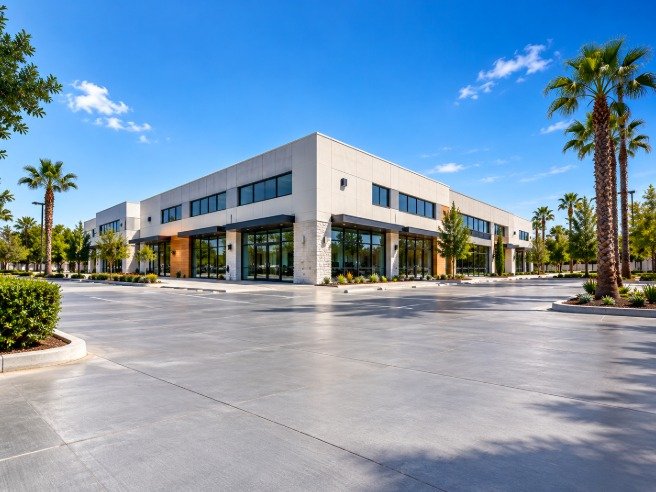
Modern commercial building with a large new concrete parking area
Crew screeding a large commercial concrete pour at a new building

Commercial Concrete Installation

Commercial concrete installation begins with careful planning and site preparation.

The process may include:

  1. 1Excavation
  2. 2Grading
  3. 3Base preparation
  4. 4Form installation
  5. 5Reinforcement
  6. 6Concrete placement
  7. 7Finishing
  8. 8Joint installation
  9. 9Curing

The thickness and reinforcement of the concrete should match the expected use of the area.

A pedestrian walkway, for example, may have different requirements than a loading zone used by delivery trucks.

Proper drainage and joint placement are especially important on large commercial projects.

Existing Concrete

Commercial Repair and Replacement

Commercial Concrete Repair

Commercial concrete surfaces can develop cracks, spalling, uneven areas, settlement, joint damage, and surface wear over time.

Repair services may include:

  • Crack repair
  • Joint repair
  • Patching
  • Grinding
  • Leveling
  • Resurfacing
  • Section replacement
  • Trip hazard correction

The best repair method depends on the cause and severity of the damage.

High-traffic areas should be repaired with materials and methods suited to regular commercial use.

Concrete Repair Services
Commercial Concrete Replacement

When large areas of concrete are severely damaged, replacement may be more practical than repeated repair.

Commercial concrete replacement may involve:

  1. 1Demolition
  2. 2Removal
  3. 3Base correction
  4. 4Drainage improvements
  5. 5Reinforcement
  6. 6New concrete placement
  7. 7Finishing

Replacement also allows the property layout to be improved.

Parking areas, sidewalks, loading zones, and access routes can sometimes be redesigned during the project.

Removal & Replacement
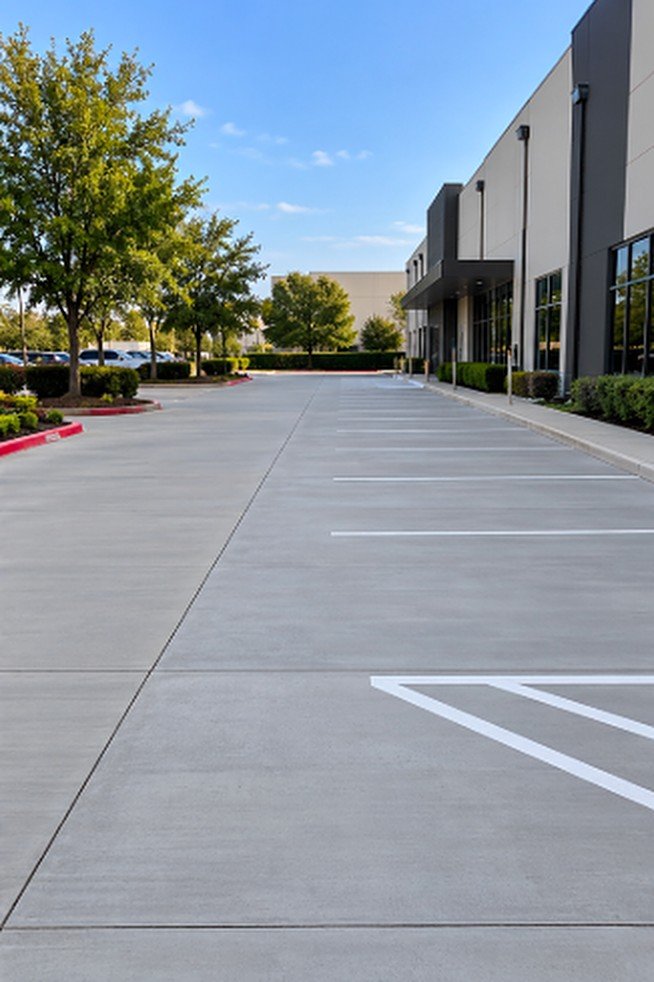
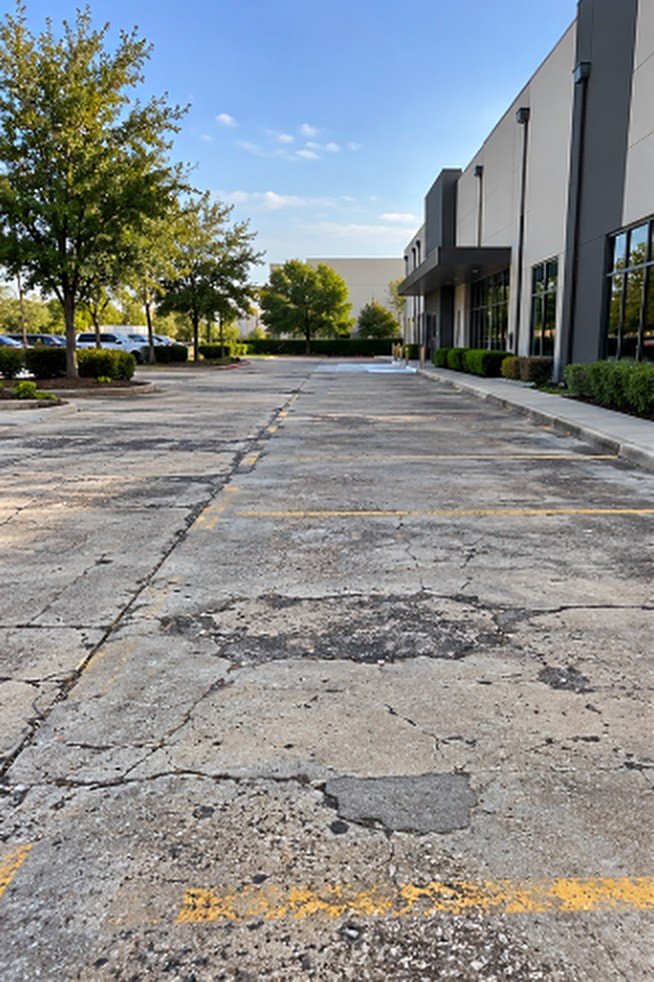
Commercial parking area after replacement with new concrete and striping Commercial parking area before replacement, cracked and patched

Concrete Parking Lots

Concrete parking lots provide durable surfaces for cars, vans, trucks, and commercial traffic.

Parking lot concrete should be planned around:

  • Traffic flow
  • Parking stall layout
  • Drainage
  • Accessible spaces
  • Delivery vehicles
  • Curbing
  • Entrances and exits

Proper joint placement and reinforcement help manage movement across larger slabs.

Concrete parking lots may also include sidewalks, ramps, curbs, gutters, and drainage channels.

Parking Lot Concrete Repair

Commercial parking areas can develop cracking, settlement, broken edges, and damaged joints.

Repairs may include:

  • Crack sealing
  • Joint repair
  • Grinding
  • Leveling
  • Partial slab replacement
  • Curb repair

Addressing damaged areas can help improve vehicle movement and pedestrian access.

Drainage issues should also be evaluated because standing water can contribute to additional deterioration.

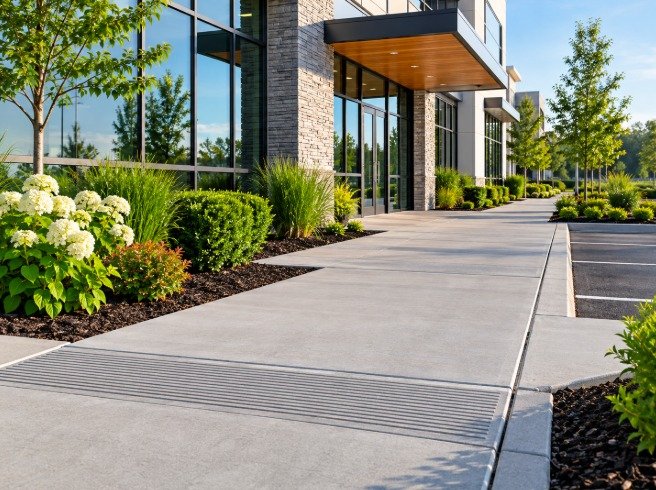
Wide commercial concrete sidewalk with a trench drain beside an office building

Commercial Sidewalks

Commercial sidewalks connect parking areas, building entrances, loading zones, and surrounding properties.

They should provide clear pedestrian routes while supporting frequent foot traffic.

Commercial sidewalk services may include:

  • New installation
  • Crack repair
  • Uneven slab repair
  • Replacement
  • ADA access improvements
  • Decorative finishes

Smooth transitions are especially important around entrances and accessible routes.

Commercial Walkways

Concrete walkways may be installed around office complexes, apartment properties, retail centers, hotels, and other commercial locations.

They can connect:

  • Buildings
  • Parking lots
  • Courtyards
  • Service areas
  • Outdoor seating
  • Public sidewalks

Walkways can be designed with standard broom finishes or decorative options depending on the property.

Sidewalk & Walkway Services
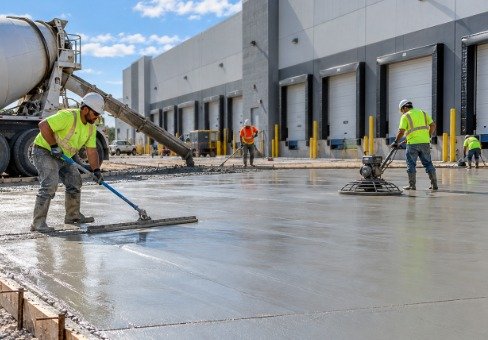
Crew pouring and troweling concrete in front of warehouse loading dock doors

Concrete Loading Docks

Loading docks and service areas are exposed to frequent truck traffic and heavy loads.

Concrete in these locations should be designed for:

  • Delivery vehicles
  • Forklifts
  • Pallet jacks
  • Loading equipment
  • Repeated impact

Loading dock concrete may require thicker slabs, reinforcement, and strong edge details.

The design should also consider drainage and vehicle access.

Loading Dock Repair

Loading dock concrete can deteriorate from repeated impact, heavy traffic, and equipment use.

Common problems include:

  • Broken edges
  • Cracks
  • Joint damage
  • Surface wear
  • Settlement

Repair may involve patching, joint rebuilding, partial slab replacement, or full replacement of heavily damaged sections.

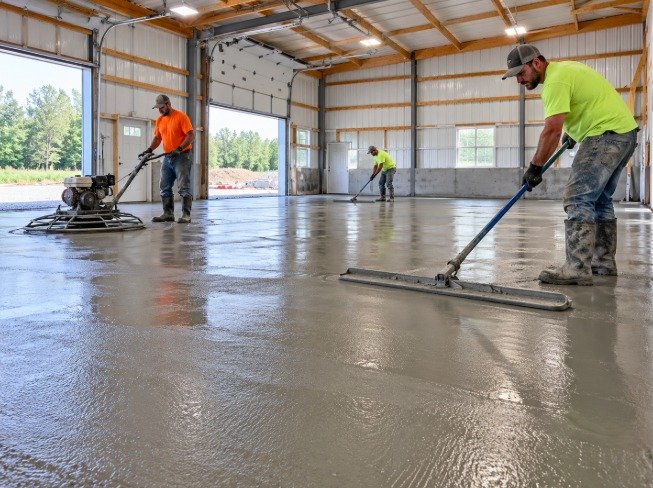
Crew finishing a new concrete floor inside a large warehouse building

Warehouse Concrete Floors

Warehouse floors need to support storage racks, forklifts, pallet jacks, machinery, and regular traffic.

A durable warehouse slab should be designed around:

  • Load capacity
  • Floor flatness
  • Joint layout
  • Reinforcement
  • Equipment movement
  • Surface wear

Warehouse concrete services may include installation, repair, polishing, leveling, resurfacing, and joint repair.

Industrial Concrete Floors

Industrial facilities often require concrete floors designed for more demanding conditions.

These surfaces may be exposed to:

  • Heavy machinery
  • Vibration
  • Chemicals
  • Repeated impact
  • High traffic
  • Equipment loads

Industrial slabs may require reinforced concrete, specialized coatings, and more extensive base preparation.

Concrete Floor Services

Properties We Serve

Retail, Restaurant, Office, Apartment, HOA, and Municipal Concrete

Every property type has its own traffic, appearance, and scheduling needs.

Retail Concrete

Retail properties rely on concrete for entrances, sidewalks, parking areas, loading zones, and sometimes interior floors.

Retail concrete should provide a clean and professional appearance while supporting frequent customer traffic.

Services may include:

  • Entry sidewalks
  • Parking areas
  • Storefront concrete
  • Accessible ramps
  • Curbs
  • Decorative concrete

Repair work can often be phased to reduce disruption to business operations.

Restaurant Concrete

Restaurants may use concrete in both front-of-house and service areas.

Common applications include:

  • Outdoor patios
  • Walkways
  • Dumpster pads
  • Loading areas
  • Drive lanes
  • Equipment pads
  • Service entrances

Outdoor dining areas may also use stamped, colored, or decorative concrete to improve appearance.

Office Building Concrete

Office properties often require concrete for entrances, sidewalks, courtyards, parking areas, and accessible routes.

Concrete services may include:

  • Entryways
  • Walkways
  • Parking lots
  • Curbs
  • Ramps
  • Courtyards
  • Decorative concrete

The appearance of front entrances and pedestrian areas can be especially important for professional properties.

Apartment Complex Concrete

Apartment and multifamily properties may contain large amounts of concrete across shared areas.

Common applications include:

  • Sidewalks
  • Parking areas
  • Curbs
  • Dumpster pads
  • Pool decks
  • Courtyards
  • Steps
  • Accessible ramps

Concrete repair can help address trip hazards and worn surfaces throughout the property.

HOA Concrete Services

Homeowners associations may be responsible for concrete in common areas.

HOA concrete services may include:

  • Sidewalk repair
  • Curb replacement
  • Pool deck repair
  • Community walkways
  • Entry areas
  • Common-area patios
  • Parking areas

Projects can be planned in phases to help manage access and reduce disruption for residents.

Municipal Concrete Work

Concrete is commonly used in public infrastructure projects.

Applications may include:

  • Sidewalks
  • Curbs
  • Gutters
  • ADA ramps
  • Drainage channels
  • Public walkways
  • Community facilities

Municipal work often requires careful adherence to project specifications, accessibility standards, and local construction requirements.

Edges and Stormwater

Commercial Curbs and Curb & Gutter Systems

Concrete Curbs

Commercial curbs help define parking areas, roadways, landscaped sections, and pedestrian zones.

Curbs may be installed as:

  • Standard curbs
  • Curb-and-gutter systems
  • Parking lot curbs
  • Landscape curbs

Damaged curbs can also be repaired or replaced when cracked or broken.

Curb & Gutter Systems

Curb-and-gutter concrete helps manage stormwater while defining road or parking boundaries.

These systems are commonly used in:

  • Parking lots
  • Commercial developments
  • Apartment communities
  • Industrial sites

Proper grading helps direct water toward drains and reduce standing water.

Curbs, Gutters & Drainage
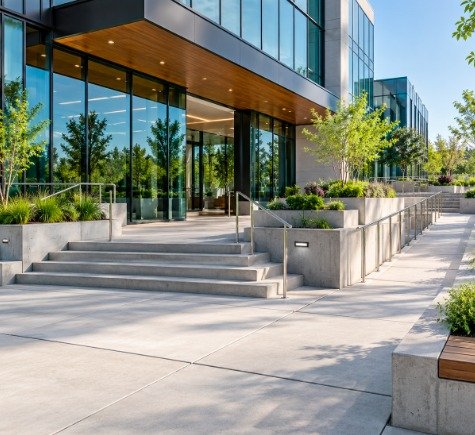
Office building entrance with wide concrete steps, handrails, planters, and an accessible walkway

Commercial Concrete Ramps

Concrete ramps provide access between different elevations.

Commercial ramp projects may involve:

  • Accessible entrances
  • Loading areas
  • Service areas
  • Sidewalk transitions

Slope, width, landings, surface texture, and railings should be planned according to the property and applicable accessibility requirements.

ADA Concrete Improvements

Commercial properties may need concrete improvements to create accessible routes.

These may include:

  • Curb ramps
  • Entrance ramps
  • Landings
  • Wider walkways
  • Smooth transitions
  • Parking access aisles

Accessibility requirements can vary, so the specific design should follow applicable regulations and project plans.

Commercial Concrete Steps

Concrete steps may be installed at building entrances, service areas, loading zones, and courtyards.

Steps should be designed around:

  • Elevation
  • Width
  • Landings
  • Handrails
  • Drainage
  • Surface texture

Repair or replacement may be needed if steps become cracked, uneven, or deteriorated.

Steps, Stairs & Ramps

Heavy-Duty Concrete

Dumpster Pads, Equipment Pads, and Commercial Slabs

Dumpster Pads

Commercial dumpster pads are exposed to heavy containers and frequent collection vehicles.

These slabs may require:

  • Reinforcement
  • Increased thickness
  • Durable finishes
  • Proper drainage

Dumpster pads are commonly installed at:

  • Restaurants
  • Retail centers
  • Apartment properties
  • Warehouses
  • Industrial sites

Commercial Equipment Pads

Concrete equipment pads can support:

  • HVAC systems
  • Generators
  • Compressors
  • Electrical equipment
  • Industrial machinery

The pad size and thickness should be designed around the equipment weight and anchoring requirements.

Service access and drainage should also be considered.

Concrete Pads

Commercial Concrete Slabs

Commercial slabs can be used for:

  • Buildings
  • Warehouses
  • Storage areas
  • Workshops
  • Equipment areas
  • Outdoor service zones

These slabs may require more reinforcement and thickness than standard residential concrete.

The design should account for expected traffic and equipment loads.

Concrete Slab Services

Keep It in Service

Resurfacing, Grinding, and Joint Repair

Commercial Concrete Resurfacing

Resurfacing may be an option when existing concrete is structurally stable but worn or unattractive.

It can be used on:

  • Walkways
  • Patios
  • Floors
  • Courtyards
  • Entry areas

Resurfacing may help improve appearance without replacing the entire slab.

Decorative finishes may also be incorporated.

Commercial Concrete Grinding

Grinding can be used to correct small elevation differences or prepare concrete for coatings and resurfacing.

Common uses include:

  • Trip hazard correction
  • Floor leveling
  • Surface preparation
  • Coating removal

Grinding can be useful in sidewalks, warehouses, garages, and other commercial spaces.

Commercial Concrete Joint Repair

Joints in commercial concrete often experience repeated wheel and equipment traffic.

Damaged joints may cause rough transitions or further slab deterioration.

Joint repair may involve:

  • Cleaning
  • Filling
  • Sealing
  • Rebuilding damaged edges

This is especially important in warehouse and industrial floors.

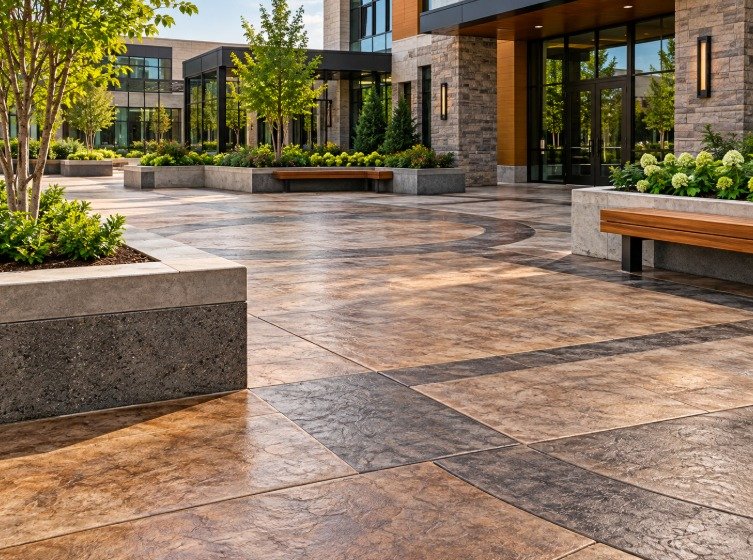
Stamped and colored decorative concrete plaza outside a commercial building

Commercial Decorative Concrete

Decorative concrete can be used to improve entrances, courtyards, patios, and customer-facing areas.

Options may include:

  • Stamped concrete
  • Colored concrete
  • Exposed aggregate
  • Decorative borders
  • Stained concrete
  • Polished floors

Decorative finishes can help commercial properties create a more finished and distinctive appearance.

Stamped & Decorative Concrete
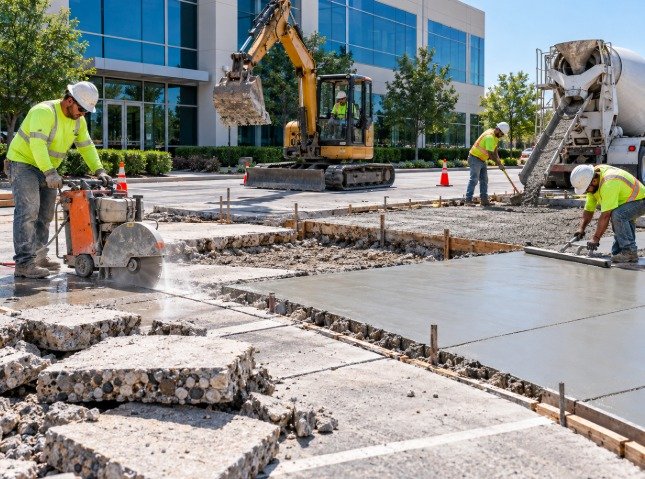
Crew saw cutting and removing commercial concrete with an excavator

Commercial Concrete Demolition

Old concrete may need to be removed before replacement or property renovations.

Commercial demolition may involve:

  • Parking lots
  • Sidewalks
  • Warehouse slabs
  • Loading areas
  • Curbs
  • Equipment pads

Careful demolition can help protect nearby structures and areas that will remain in place.

Commercial Concrete Cutting

Concrete cutting can be used for controlled demolition, utility access, joint installation, and renovations.

Saw cutting may be needed to:

  • Remove damaged sections
  • Create clean replacement boundaries
  • Install drains
  • Access plumbing
  • Modify slabs

Precise cutting can reduce unnecessary damage to surrounding concrete.

Cutting & Removal Services

Commercial Concrete Drainage

Drainage is an important part of commercial concrete design.

Poor drainage can contribute to:

  • Standing water
  • Surface deterioration
  • Settlement
  • Ice formation
  • Water entering buildings

Drainage solutions may include:

  • Sloped concrete
  • Gutters
  • Drainage channels
  • Trench drains
  • Catch basins

Proper drainage should be considered during both new construction and replacement projects.

New and Existing Properties

New Construction and Renovations

Concrete for New Commercial Construction

New commercial construction may require concrete for multiple areas of the property.

This can include:

Coordinating these elements early can help create better transitions between different parts of the site.

Concrete for Commercial Renovations

Renovation projects may require removing, modifying, or replacing existing concrete.

Common needs include:

  • Expanding entrances
  • Relocating equipment
  • Adding ramps
  • Changing floor layouts
  • Installing new utilities
  • Modifying loading areas

Concrete cutting and selective demolition can help adapt the property to new uses.

Choosing the Right Commercial Concrete Solution

Every commercial project has different requirements.

A retail sidewalk may need a very different design than a warehouse floor or loading dock.

Evaluating how the space will actually be used helps determine the right concrete system.

Get A Free Estimate

Important factors include:

  • Vehicle traffic
  • Pedestrian traffic
  • Equipment loads
  • Drainage
  • Accessibility
  • Business operations
  • Existing concrete condition
  • Maintenance needs

Complete Commercial Concrete Solutions

Our commercial concrete services include installation, repair, replacement, parking lots, sidewalks, loading docks, warehouse floors, industrial slabs, retail concrete, restaurant concrete, office properties, apartment complexes, HOA projects, and municipal concrete work.

Whether the project involves a small commercial repair or a large concrete installation, careful preparation and planning are essential.

With the right thickness, reinforcement, drainage, finishing, and maintenance, commercial concrete can provide durable and dependable surfaces for high-traffic business properties for many years.

Commercial FAQs

Commercial Concrete Questions, Answered

Yes. We plan commercial projects around your operations so customers, tenants, and deliveries can keep moving. Larger jobs can be split into phases, with one section of a parking lot, sidewalk, or loading area closed at a time, and work can be scheduled during slower hours when possible. We coordinate access, signage, and safety barriers in advance so everyone knows what to expect.

Yes. We work with property managers, HOA boards, facility managers, and general contractors on projects of all sizes. We provide clear written estimates, can prioritize repairs by safety and budget, and plan phased work that limits disruption for residents and tenants. We also keep you updated throughout the project so you can share progress with owners, board members, or residents.

It depends on the traffic and loads. Pedestrian sidewalks are usually thinner than drive areas, while parking lots, loading docks, dumpster pads, and warehouse floors that carry trucks, forklifts, or heavy equipment need thicker slabs and more reinforcement. Many commercial projects are built to engineered plans or project specifications, and we build to those requirements or recommend a design based on how the area will be used.

Yes. We repair and replace uneven sidewalk panels, grind raised edges, and build curb ramps, entrance ramps, landings, wider walkways, and accessible parking access aisles. Accessibility requirements depend on the property and applicable regulations, so we follow your project plans or work with your designer or consultant to make sure the new concrete creates smooth, accessible routes across the site.

Commercial pricing depends on the size of the project, slab thickness, reinforcement, demolition, drainage, site access, and scheduling needs such as phasing or after-hours work. As a general guide, many commercial concrete projects fall around $8 to $20 per square foot. We visit the site and provide a free, detailed written estimate with a clear scope, schedule, and pricing.

Book Service

Get Your Commercial Project Started

Fill out the form below and our team will get back to you quickly with a free estimate.

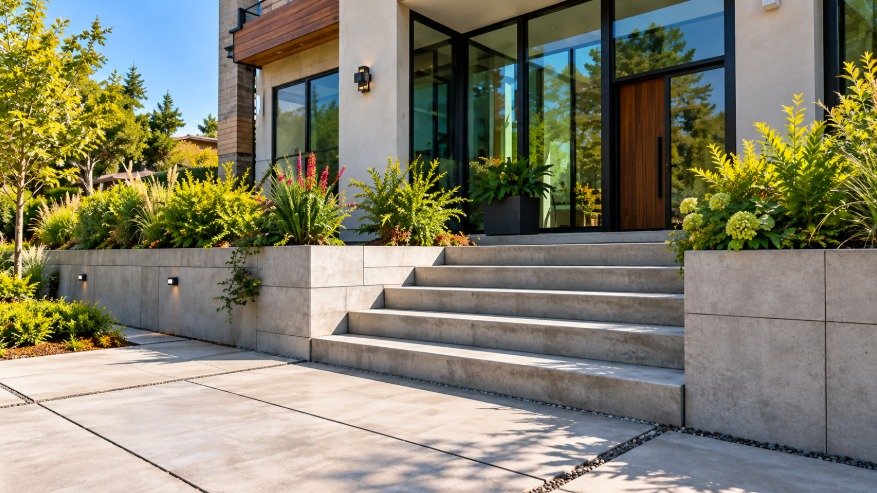
Concrete steps and walkway at a modern Los Angeles home
  • Free Estimates
  • Quick Response
  • Service Throughout Los Angeles
  • Residential & Commercial
  • Licensed, Bonded & Insured