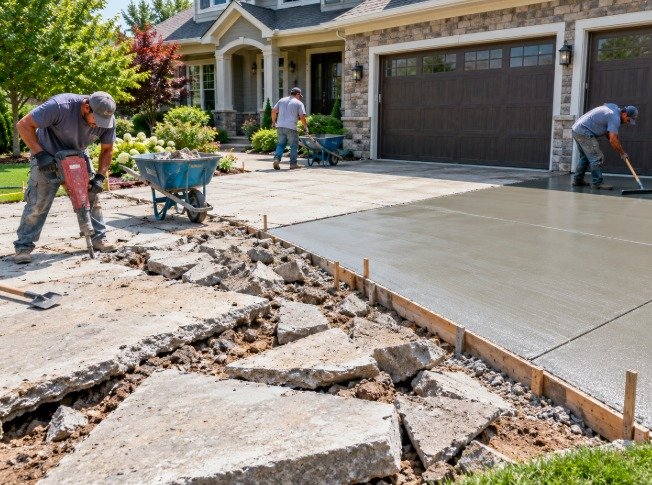
Crew breaking out an old concrete driveway while new concrete is placed beside it

Concrete Removal & Replacement in Los Angeles

Demolition, removal, saw cutting, breaking, hauling, and disposal, followed by new driveways, patios, sidewalks, and slabs built on a properly prepared base.

Concrete Removal & Replacement Services

Out With the Old, Built Right Underneath

Concrete is built to last, but there are times when an existing slab, driveway, patio, sidewalk, floor, or other concrete surface becomes too damaged to repair effectively. Severe cracking, settlement, structural movement, poor drainage, broken edges, and years of wear can make removal and replacement the better long-term option.

Concrete removal and replacement services are designed to safely remove damaged or unwanted concrete, prepare the underlying area correctly, and install a new surface that is better suited to the property and intended use.

Our services include concrete demolition, concrete removal, concrete replacement, driveway removal, patio removal, sidewalk removal, slab removal, concrete cutting, saw cutting, breaking, hauling, and disposal.

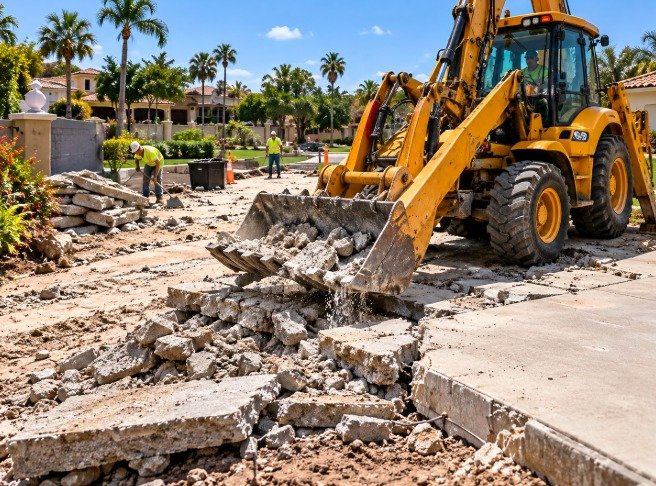
Backhoe breaking up and removing old concrete at a residential site
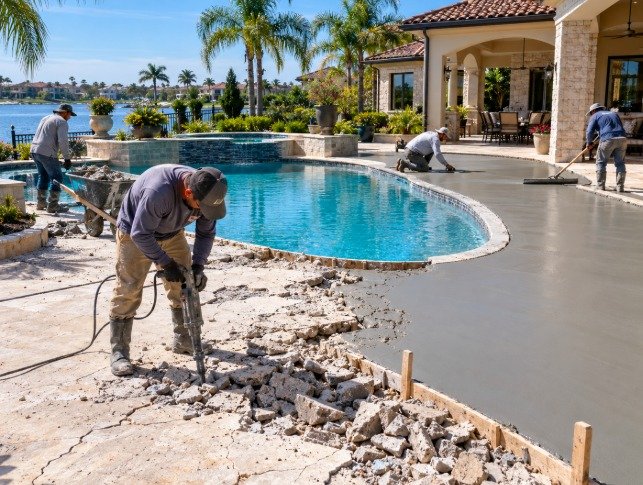
Worker jackhammering an old pool deck while new concrete is finished around the pool

Concrete Demolition

Concrete demolition is the process of breaking apart and removing existing concrete that is no longer usable or needed.

Demolition may be required for:

  • Old driveways
  • Damaged patios
  • Broken sidewalks
  • Concrete slabs
  • Garage floors
  • Foundations
  • Steps
  • Curbs
  • Commercial concrete areas

The demolition method depends on the size, thickness, reinforcement, and location of the concrete.

Smaller areas may be removed with handheld tools, while larger projects may require heavier equipment.

Careful planning helps protect nearby structures, landscaping, utilities, and other concrete that is intended to remain.

How It Works

Concrete Removal and Replacement

Concrete Removal

Concrete removal involves taking out an existing slab or concrete section after it has been broken into manageable pieces.

The area is cleared so the underlying soil or base can be inspected and prepared for the next stage of work.

Concrete removal may be necessary when the surface has:

  • Extensive cracking
  • Severe settlement
  • Structural damage
  • Major surface deterioration
  • Poor drainage
  • Repeated failed repairs

Removing old concrete also makes it possible to correct problems beneath the slab before new concrete is installed.
Concrete Replacement

Concrete replacement combines removal of the old material with installation of new concrete.

This service is often the best choice when the existing concrete has deteriorated beyond practical repair.

The replacement process may include:

  1. 1Removing damaged concrete
  2. 2Hauling away debris
  3. 3Excavating the area
  4. 4Correcting drainage
  5. 5Preparing and compacting the base
  6. 6Installing forms
  7. 7Adding reinforcement
  8. 8Pouring new concrete
  9. 9Finishing and curing the surface

Replacement provides an opportunity to improve the original design and address issues that may have contributed to the damage.

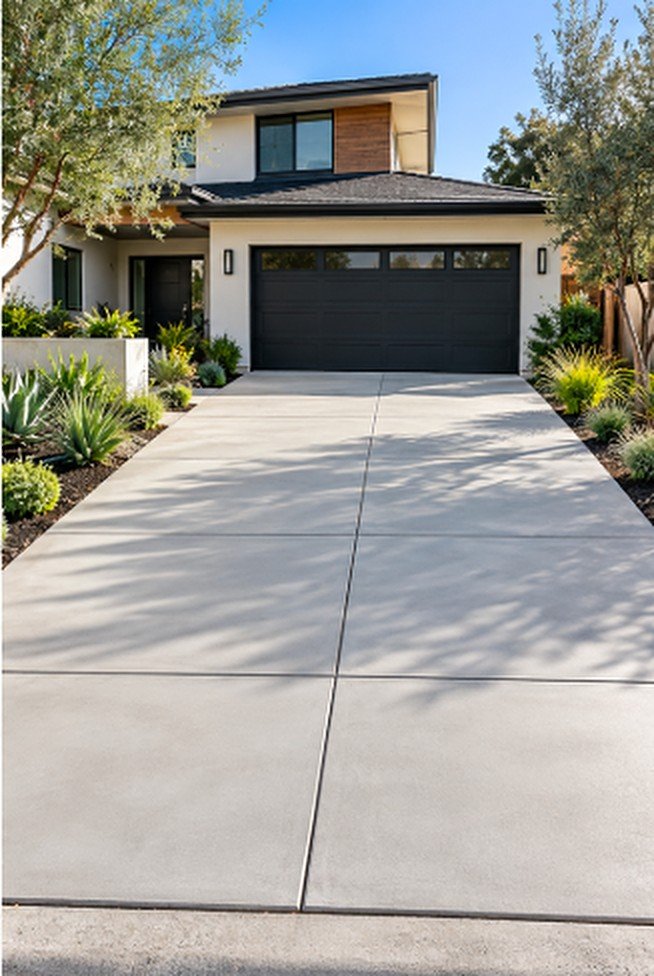
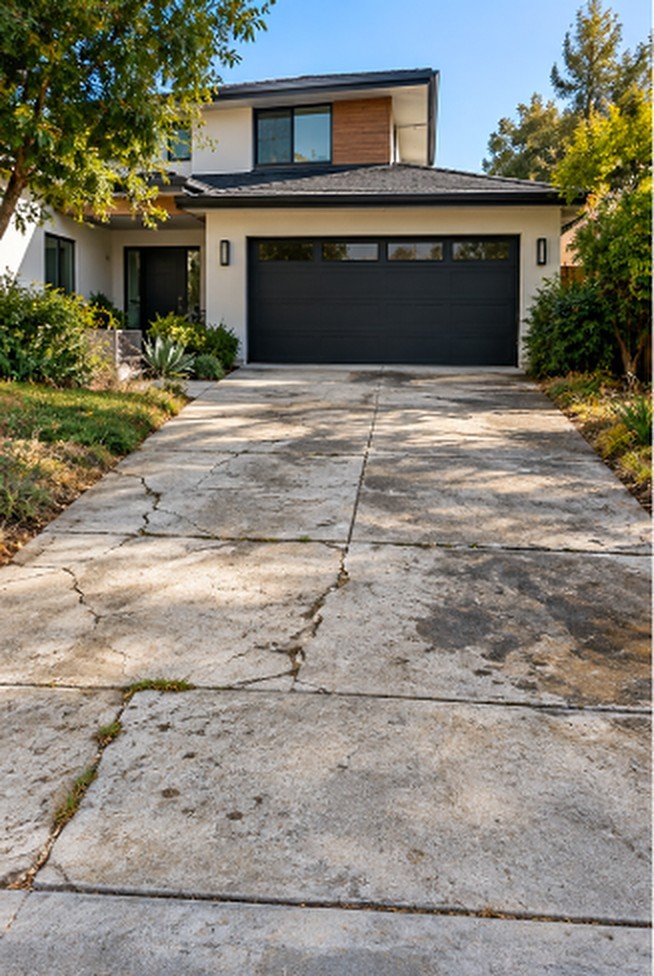
Driveway after replacement with new concrete Driveway before removal, cracked and damaged

Driveway Removal

Old concrete driveways can become heavily cracked, uneven, or deteriorated after years of vehicle traffic and ground movement.

Driveway removal involves breaking and removing the existing concrete so the area can be rebuilt.

Removal may be appropriate when the driveway has:

  • Widespread cracking
  • Large sunken sections
  • Major drainage problems
  • Multiple patches
  • Broken edges
  • Severe surface deterioration

Once the old driveway is removed, the base can be regraded and compacted before replacement.

The new driveway may also be widened, extended, or redesigned.

Driveway Replacement

A replacement driveway can provide a fresh surface while correcting problems with the original installation.

The new driveway can be designed with:

  • Improved drainage
  • Better grading
  • Updated dimensions
  • Reinforcement
  • Decorative borders
  • Stamped concrete
  • Colored concrete
  • Exposed aggregate

Replacement is also a good opportunity to improve vehicle access or create additional parking space.

Concrete Driveway Services
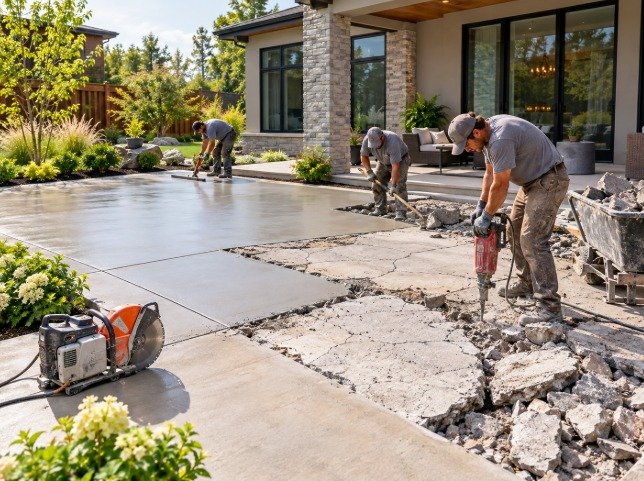
Crew breaking out an old patio slab next to freshly poured replacement concrete

Patio Removal

Patio removal may be needed when the existing slab is cracked, sunken, outdated, or no longer fits the outdoor layout.

Removing the patio creates space for:

  • A new concrete patio
  • A larger outdoor living area
  • Landscaping
  • An outdoor kitchen
  • A pool deck
  • A redesigned backyard

Care should be taken around nearby walls, doors, utilities, landscaping, and drainage areas.

Once the old patio is removed, the site can be prepared for a new design.

Patio Replacement

Concrete patio replacement allows homeowners to completely redesign the outdoor space.

A replacement patio can be:

  • Larger
  • Smaller
  • Repositioned
  • Reshaped
  • Raised or lowered
  • Decoratively finished

This is also a good opportunity to add stamped concrete, color, decorative borders, or custom patterns.

Improved drainage can also be incorporated into the new layout.

Concrete Patio Services
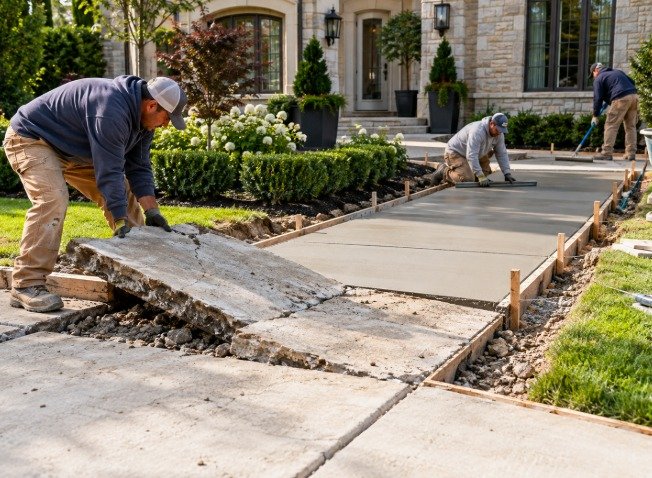
Worker lifting out a broken sidewalk panel beside a newly poured walkway

Sidewalk Removal

Sidewalk sections may need to be removed when cracking, settlement, root damage, or broken edges make repair impractical.

Sidewalk removal may involve taking out one damaged panel or a longer section.

Common reasons include:

  • Severe trip hazards
  • Tree root damage
  • Sunken slabs
  • Broken joints
  • Widespread cracking
  • Poor alignment

After removal, the base can be corrected before new concrete is installed.
Sidewalk Replacement

Replacing a damaged sidewalk can improve both appearance and pedestrian access.

Replacement allows the new walkway to be properly graded and aligned with surrounding concrete.

It may also provide an opportunity to:

  • Widen the walkway
  • Improve drainage
  • Add accessibility features
  • Use decorative finishes
  • Change the path layout

Proper joint placement and base preparation help improve long-term performance.

Sidewalk & Walkway Services
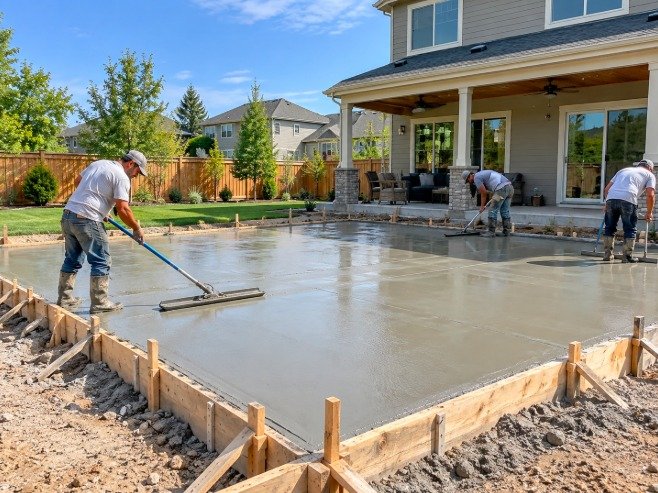
Crew pouring and leveling a new replacement concrete slab

Concrete Slab Removal

Concrete slab removal is commonly used for garages, sheds, workshops, utility areas, equipment pads, and other structures.

A slab may need to be removed because of:

  • Structural cracking
  • Settlement
  • Incorrect thickness
  • Poor reinforcement
  • Damage from equipment
  • Property renovations

Before removal begins, it is important to identify any utilities, plumbing, electrical lines, or other systems that may pass through or beneath the slab.

Concrete Slab Replacement

Concrete slab replacement involves rebuilding the area with a new base and properly designed slab.

The new slab can be customized for the intended use.

Factors may include:

  • Slab thickness
  • Reinforcement
  • Equipment loads
  • Vehicle traffic
  • Drainage
  • Moisture control
  • Surface finish

A replacement slab can provide a more reliable foundation for garages, sheds, workshops, equipment, or parking.

Concrete Slab Services

Controlled Demolition

Cutting, Saw Cutting, and Breaking

Concrete Cutting

Concrete cutting is used when precise sections need to be removed without disturbing surrounding areas.

It may be necessary for:

  • Creating openings
  • Removing damaged sections
  • Utility work
  • Plumbing access
  • Drain installation
  • Expansion joints
  • Renovations

Specialized equipment is used to create controlled cuts through the concrete.

Precise cutting can make removal cleaner and reduce unnecessary damage.

Concrete Saw Cutting

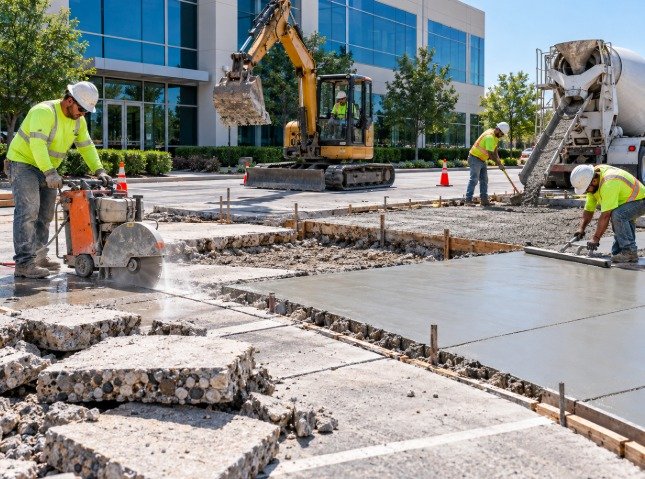
Saw cutting uses specialized saws to make straight, controlled cuts in concrete.

It is often used during demolition and replacement projects.

Saw cutting may be used to:

  • Separate damaged sections
  • Create control joints
  • Define removal boundaries
  • Access utilities
  • Modify slabs
  • Remove part of a driveway or sidewalk

The depth and type of cut depend on the thickness of the concrete and the project requirements.

Concrete Breaking

Concrete breaking is the process of reducing a slab into smaller sections so it can be removed.

This may be done using:

  • Jackhammers
  • Hydraulic breakers
  • Handheld demolition tools
  • Heavy equipment

The method depends on the size and thickness of the concrete.

Concrete breaking is commonly used for driveways, patios, foundations, slabs, floors, and commercial areas.

Clean Job Sites

Hauling and Disposal

Concrete Hauling

Once the old concrete is removed, the debris must be transported away from the property.

Concrete hauling services help keep the work area organized and clear.

Broken concrete is loaded into trucks or containers and removed from the site.

Efficient hauling is especially important on larger projects where large amounts of material are generated.

Concrete Disposal

Concrete disposal should be handled according to local requirements.

In many cases, old concrete can be processed for recycling.

Recycled concrete may be crushed and reused as:

  • Base material
  • Fill
  • Road material
  • Construction aggregate

Proper disposal helps keep the job site clean and reduces unnecessary waste.

How Much to Replace

Partial and Full Concrete Replacement

Partial Concrete Replacement

Not every project requires removing an entire slab.

Partial replacement may be appropriate when only certain sections are badly damaged.

This may include:

  • One driveway panel
  • A portion of a sidewalk
  • A small patio section
  • A garage floor area
  • A broken curb

The damaged concrete is removed and replaced while surrounding areas remain in place.

Careful cutting and joint placement can help create a cleaner transition.

Full Concrete Replacement

Full replacement may be the better choice when damage is widespread.

This may be necessary when:

  • Most of the surface is cracked
  • Settlement affects multiple areas
  • Drainage is poor
  • The base has failed
  • Previous repairs have not lasted
  • The concrete no longer meets the property's needs

Complete replacement allows the entire area to be rebuilt from the ground up.

Residential Concrete Removal

Residential concrete removal may be needed for:

  • Driveways
  • Patios
  • Walkways
  • Garage floors
  • Steps
  • Slabs
  • Pool decks
  • Foundations

Homeowners may remove concrete to replace damaged surfaces or redesign outdoor spaces.

Careful demolition is important around homes because many projects are close to walls, landscaping, plumbing, or utilities.

Crew saw cutting and removing commercial concrete while an excavator clears debris

Commercial Concrete Removal

Commercial properties often require removal of larger or heavier concrete sections.

Common applications include:

  • Parking areas
  • Sidewalks
  • Warehouse floors
  • Loading zones
  • Equipment pads
  • Curbs
  • Commercial slabs

These projects may require heavy equipment and careful planning around business operations.

The replacement surface should be designed for the traffic and loads expected in the area.

Specialty Removal

Remodeling and Reinforced Concrete Removal

Concrete Removal for Remodeling

Concrete removal is often part of renovation and remodeling projects.

It may be needed when:

  • Expanding a building
  • Moving walls
  • Installing utilities
  • Creating new doorways
  • Changing floor plans
  • Adding drainage
  • Building additions

Controlled cutting and demolition can help remove only the concrete that needs to be changed.

Removing Reinforced Concrete

Reinforced concrete contains materials such as rebar or wire mesh.

Removing reinforced concrete can require additional cutting and handling because the steel must also be separated.

Reinforced concrete is common in:

  • Foundations
  • Commercial slabs
  • Garage floors
  • Structural walls
  • Heavy-duty driveways

Specialized equipment may be needed for efficient removal.

Compacted gravel base, forms, and rebar prepared before new concrete is poured

Preparing the Area for New Concrete

Removal is only the first part of a replacement project.

The area underneath should be properly prepared before new concrete is installed.
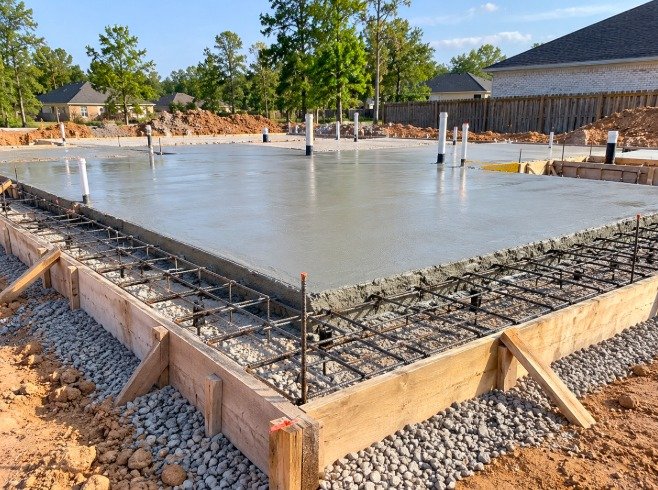
Preparation may involve:

  • Excavation
  • Soil correction
  • Grading
  • Base installation
  • Compaction
  • Drainage improvements
  • Form installation
  • Reinforcement

Poor base preparation can lead to premature cracking and settlement.

Taking time to prepare the site correctly can improve the performance of the replacement concrete.

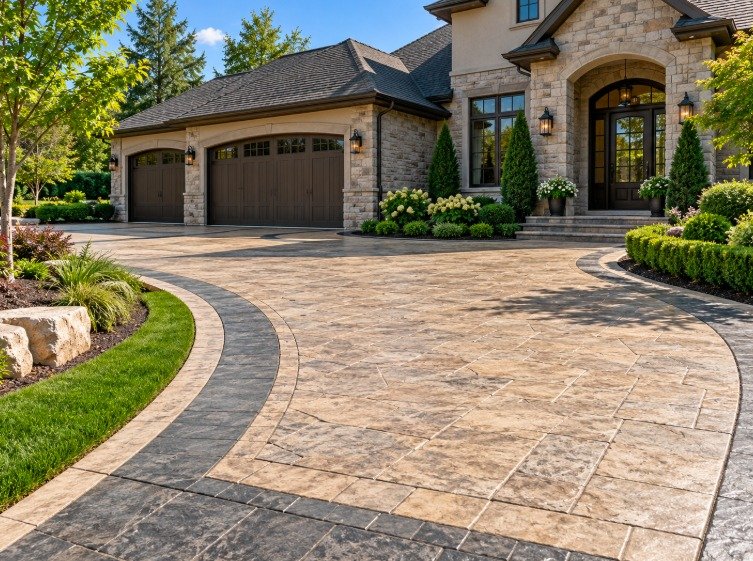
Replacement driveway finished with stamped decorative concrete and a dark border

Concrete Replacement with Decorative Finishes

Replacement projects are a good opportunity to upgrade plain concrete with a decorative finish.

Options may include:

  • Stamped concrete
  • Colored concrete
  • Exposed aggregate
  • Decorative borders
  • Saw-cut patterns
  • Custom textures

These finishes can be used for driveways, patios, walkways, pool decks, and other visible areas.

Stamped & Decorative Concrete

When Should Concrete Be Replaced?

A small crack does not automatically mean replacement is necessary.

However, when damage affects a large portion of the slab, replacement can provide a more complete solution.

Get A Free Estimate

Replacement may be the better choice when the concrete has:

  • Widespread cracking
  • Large areas of settlement
  • Structural movement
  • Severe surface deterioration
  • Major drainage problems
  • Multiple failed repairs
  • Broken or unstable sections

Repair vs. Replacement

Choosing between repair and replacement depends on the condition of the concrete.

Repair may be suitable when:

  • Damage is limited
  • The slab remains stable
  • Cracks are isolated
  • Settlement is minor
Concrete Repair Services

Replacement may be more appropriate when:

  • Damage is widespread
  • The base has failed
  • Multiple areas are moving
  • The surface is severely deteriorated

A proper evaluation can help determine which approach makes more sense.

Complete Concrete Removal & Replacement Solutions

Our concrete removal and replacement services include demolition, removal, driveway replacement, patio replacement, sidewalk replacement, slab removal, concrete cutting, saw cutting, breaking, hauling, disposal, partial replacement, and full replacement.

Whether the project involves removing a small damaged section or replacing a large concrete area, proper demolition and site preparation are essential.

With careful removal, correct base preparation, and professional installation, old or damaged concrete can be replaced with a stronger, cleaner, and more functional new surface.

Removal & Replacement FAQs

Concrete Removal and Replacement Questions, Answered

Most residential driveways, patios, and sidewalks can be removed in a day or two, with base preparation, forming, and the new pour taking another day or two, depending on size and access. After the pour, you can usually walk on the concrete in a day or two and drive on a new driveway after about a week. We give you a clear schedule before work begins.

Yes. Hauling and disposal are included in our removal and replacement projects. We break the old concrete into manageable pieces, load it, and remove it from your property so the site is left clean. Whenever possible, the old concrete is taken to a recycling facility, where it can be crushed and reused as base material or construction aggregate instead of going to a landfill.

Yes. If only a few panels or sections are badly damaged, we can saw cut clean lines, remove just those areas, and replace them while the rest stays in place. Keep in mind that new concrete may look slightly different from older, weathered concrete at first. If most of the surface is failing, full replacement is usually the better long-term value.

We plan every removal to protect what stays. We saw cut clean boundaries, use the right size equipment for the space, protect walls, doors, and planting areas, and work carefully near the house. Before digging, underground utilities are located and marked. If landscaping or sprinklers must be moved to reach the concrete, we explain that up front in your estimate.

Yes, and replacement is the ideal time to do it. Since the old surface is already coming out, you can change the size, shape, or layout and choose stamped, colored, exposed aggregate, or saw-cut finishes, or add decorative borders. We can also improve drainage and grading at the same time. We will walk you through finish options and pricing during your free estimate.

Book Service

Get Your Replacement Project Started

Fill out the form below and our team will get back to you quickly with a free estimate.

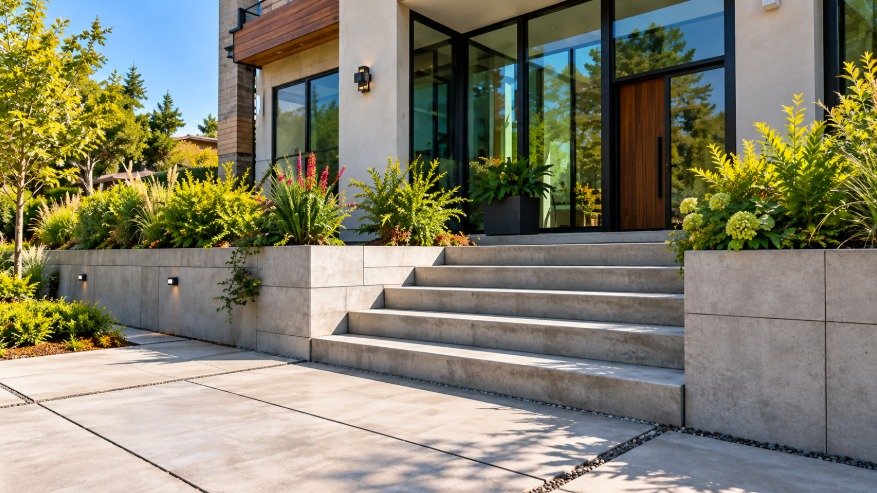
Concrete steps and walkway at a modern Los Angeles home
  • Free Estimates
  • Quick Response
  • Service Throughout Los Angeles
  • Residential & Commercial
  • Licensed, Bonded & Insured