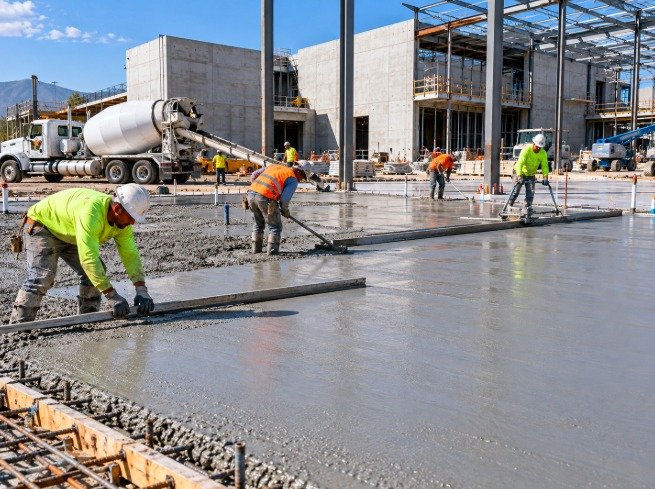
Crew screeding a large concrete slab pour at a commercial site

Concrete Slab Services in Los Angeles

New slabs, repair, replacement, garage and shed slabs, workshop floors, and concrete pads for equipment, HVAC, generators, hot tubs, dumpsters, and parking.

Concrete Slab Services

A Strong Foundation for Every Project

Concrete slabs provide a strong and dependable foundation for many residential, commercial, and outdoor projects. They can be used for garages, sheds, workshops, equipment areas, HVAC systems, generators, hot tubs, parking spaces, and many other applications.

A properly installed concrete slab starts with careful preparation. The ground must be evaluated, graded, compacted, and prepared to support the weight of the slab and anything that will be placed on top of it. Thickness, reinforcement, drainage, and joint placement should also be planned according to the intended use.

Our concrete slab services include new slab installation, slab repair, slab replacement, garage slabs, shed slabs, workshop slabs, equipment pads, HVAC pads, generator pads, hot tub pads, dumpster pads, and concrete parking pads.

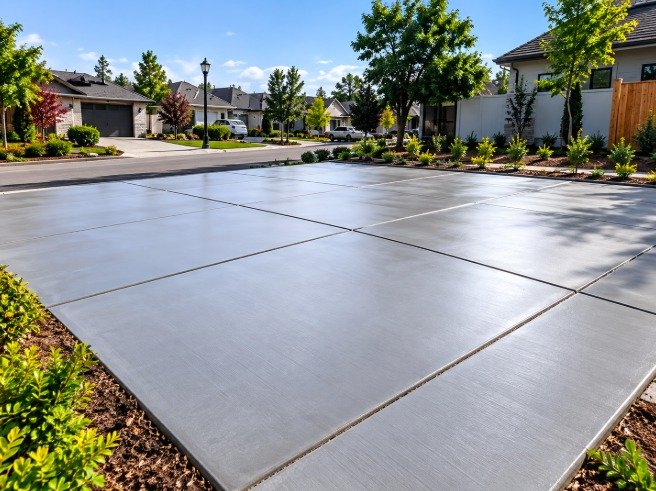
Large new scored concrete slab at a residential property
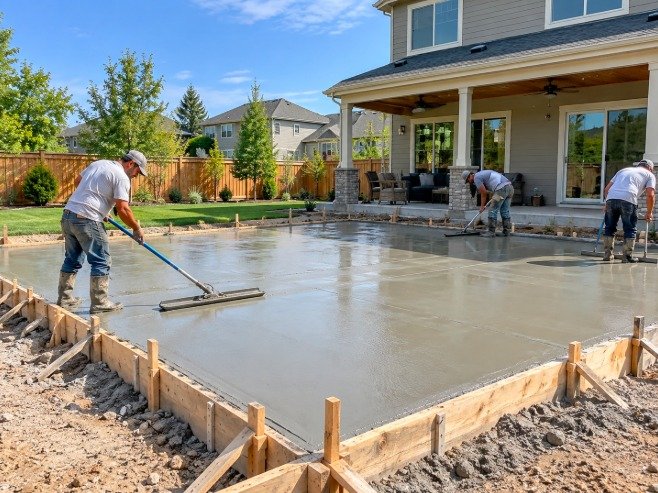
Crew leveling a freshly poured residential concrete slab inside wood forms

Concrete Slab Installation

Concrete slab installation involves much more than pouring concrete into a framed area.

The process typically begins with measuring and laying out the project area. The site is then excavated as needed, graded, and prepared with a compacted base.

Forms are installed to establish the shape and elevation of the slab. Depending on the project, reinforcement such as rebar or wire mesh may also be used.

Concrete is then poured, leveled, finished, and allowed to cure.

The slab design should take into account the weight it will support, the surrounding soil, moisture conditions, drainage, and the intended use of the space.

A patio slab, for example, may have different requirements than a slab intended to support a heavy workshop or large vehicle.

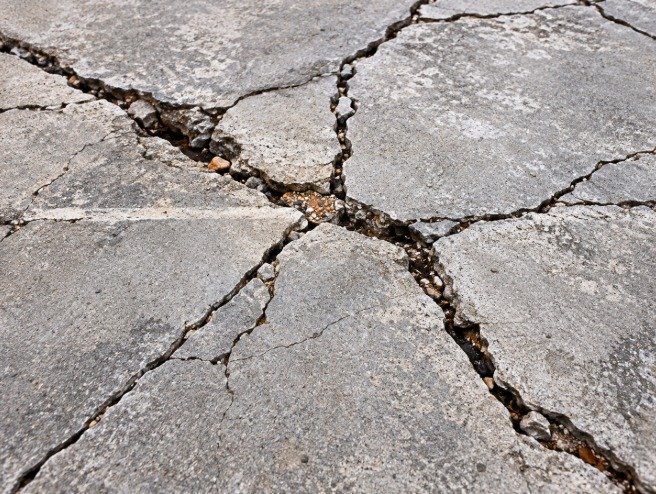
Cracked concrete slab that needs repair

Concrete Slab Repair

Concrete slabs can develop problems over time due to settlement, cracking, erosion, water intrusion, soil movement, or heavy loads.

Common slab problems include:

  • Cracks
  • Broken corners
  • Surface deterioration
  • Uneven sections
  • Settlement
  • Spalling
  • Low spots
  • Drainage issues
  • Joint damage

Concrete slab repair may include crack filling, patching, leveling, resurfacing, joint repair, or replacing isolated sections.

The correct repair method depends on the cause and severity of the damage.

Before repairing a slab, it is important to determine whether the problem is limited to the surface or related to movement underneath the concrete.

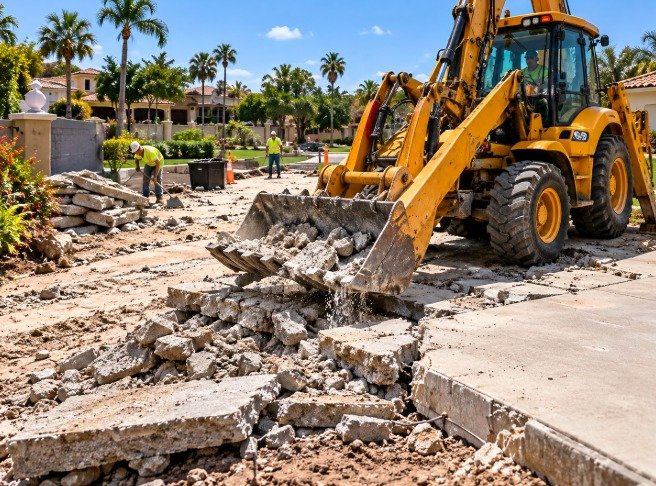
Backhoe removing old broken concrete before a new slab is installed

Concrete Slab Replacement

When a slab has widespread cracking, significant settlement, major deterioration, or extensive structural damage, replacement may be the better option.

Concrete slab replacement usually involves removing the existing concrete and inspecting the base underneath.

Once the old slab is removed, the area can be regraded and compacted before new concrete is installed.

Replacement also creates an opportunity to improve the slab design.

The new slab may be made thicker, reinforced differently, repositioned, enlarged, or adjusted to improve drainage.

This is especially useful when the original slab was not designed for its current use.

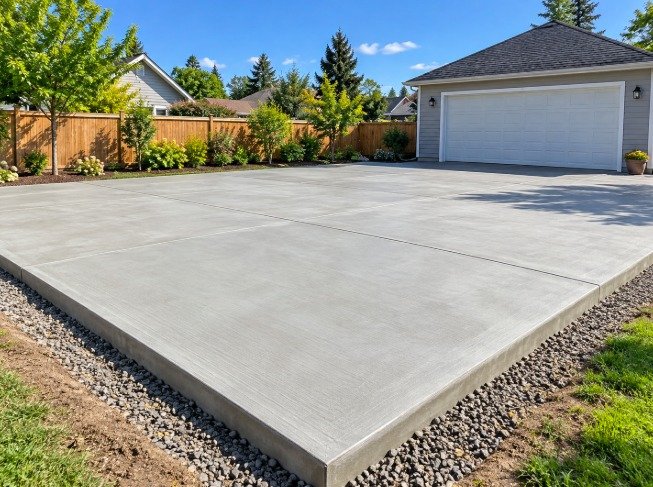
New concrete slab in front of a detached two-car garage

Garage Concrete Slabs

A garage slab must be designed to support regular vehicle traffic, storage, tools, and other loads.

Proper base preparation and reinforcement are especially important for garage concrete.

The slab should also be planned around garage doors, wall framing, drainage, and transitions to the driveway.

Garage slabs may be installed for:

  • Attached garages
  • Detached garages
  • Single-car garages
  • Two-car garages
  • Multi-car garages
  • Workshops
  • Storage garages

A smooth, durable finish can also make the garage easier to clean and maintain.

Shed Concrete Slabs

Concrete slabs provide a strong base for sheds and outdoor storage buildings.

A shed slab can help keep the structure level and separated from soil moisture.

The size and thickness of the slab should match the dimensions and weight of the shed.

Concrete slabs may be used for:

  • Garden sheds
  • Tool sheds
  • Storage buildings
  • Lawn equipment sheds
  • Small workshops
  • Utility buildings

The slab can also be extended slightly beyond the shed walls to create a small entrance or work area.
Workshop Concrete Slabs

Workshop slabs may need to support heavier loads than a standard residential slab.

They can be designed for tools, workbenches, machinery, vehicles, storage racks, or other equipment.

Before installation, it is important to consider:

  • Equipment weight
  • Vehicle access
  • Floor drains
  • Electrical systems
  • Workbench locations
  • Future expansion
  • Storage requirements

A properly planned concrete workshop floor can provide a durable surface for both light-duty and heavy-duty use.

Concrete Pads

Pads for Equipment, Utilities, Hot Tubs, and Parking

Every pad is sized and built around the weight it will carry, with room for service access and proper drainage.

Equipment Pads

Concrete equipment pads provide level and stable support for mechanical, electrical, and industrial equipment.

They can be used around residential, commercial, and industrial properties.

Equipment pads may support:

  • Pumps
  • Compressors
  • Electrical equipment
  • Utility systems
  • Industrial machinery
  • Outdoor mechanical units

The slab dimensions and thickness should be designed around the size and weight of the equipment.

Proper placement is also important for service access and drainage.

HVAC Concrete Pads

HVAC units are often installed on concrete pads to create a stable and level base.

A concrete HVAC pad helps keep the equipment elevated above the surrounding soil and can reduce movement caused by soft or uneven ground.

HVAC pads may be installed for:

  • Air conditioning condensers
  • Heat pumps
  • Commercial HVAC equipment
  • Package units

The pad should be sized so the equipment sits securely within the slab boundaries.

Clearance for maintenance and service should also be considered.

Generator Concrete Pads

Standby and commercial generators often require a solid foundation.

A concrete generator pad can provide a stable base while helping keep the unit level.

The pad should be planned around the generator dimensions, weight, fuel connections, electrical wiring, and required service clearance.

Larger generators may require thicker or reinforced concrete depending on the equipment specifications.

Proper positioning can also make future maintenance easier.

Hot Tub Concrete Pads

Hot tubs can become extremely heavy when filled with water and occupied by several people.

Because of this, the supporting surface must be strong and level.

Concrete hot tub pads provide a durable foundation that can be designed specifically for the size and weight of the spa.

The slab should also be planned around drainage and access to electrical or plumbing connections.

Concrete pads can be installed for both above-ground spas and larger backyard hot tub areas.

Decorative finishes may also be added to help the pad blend with an existing patio or outdoor living space.

Dumpster Pads

Dumpster pads are commonly used around commercial buildings, apartment properties, restaurants, warehouses, and industrial facilities.

These slabs must be designed to withstand repeated heavy loads from dumpsters and collection vehicles.

Dumpster pads may require reinforced concrete and additional thickness depending on the expected traffic.

They can also be planned with surrounding curbs, enclosure walls, drainage, and access lanes.

A well-built dumpster pad can help reduce surface damage in high-use service areas.

Concrete Parking Pads

Concrete parking pads create additional space for vehicles without requiring a completely new driveway.

They may be installed beside a home, garage, driveway, or commercial building.

Parking pads can be useful for:

  • Cars
  • Pickup trucks
  • Work vans
  • Trailers
  • Recreational vehicles
  • Boats

The slab should be designed around the expected vehicle weight and daily use.

Proper base preparation and drainage are important because parking pads are exposed to repeated vehicle loads.

Parking & Access Areas
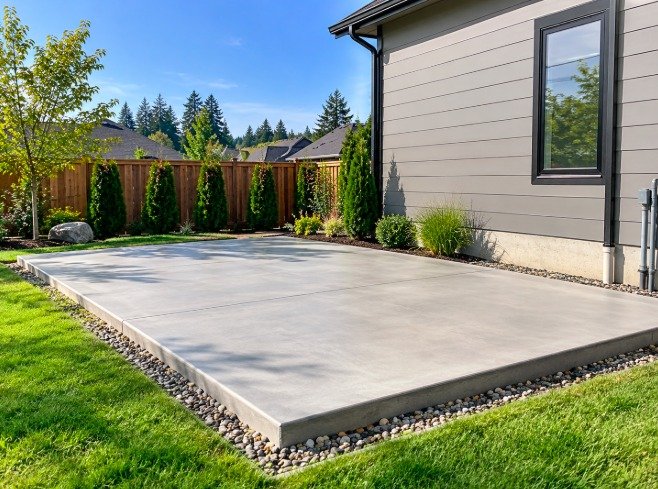
Residential concrete slab beside a house with a gravel border

Residential Concrete Slabs

Residential slabs can support a wide range of home improvement projects.

Common residential applications include:

  • Garages
  • Sheds
  • Workshops
  • Outdoor kitchens
  • Hot tubs
  • Storage buildings
  • Utility equipment
  • Parking areas

The slab can be customized in size, thickness, and finish depending on the project.

Some residential slabs may also be designed as part of a larger patio or outdoor living area.

Commercial concrete slab being poured and screeded at a new building

Commercial Concrete Slabs

Commercial concrete slabs may be used for warehouses, service areas, equipment zones, parking areas, storage spaces, and industrial applications.

These slabs often need to support heavier traffic and equipment than residential concrete.

Commercial projects may require:

  • Reinforced concrete
  • Increased slab thickness
  • Heavy-duty base preparation
  • Planned joints
  • High-load areas
  • Drainage systems
  • Equipment anchoring

Careful planning helps ensure the slab is suitable for the expected use.

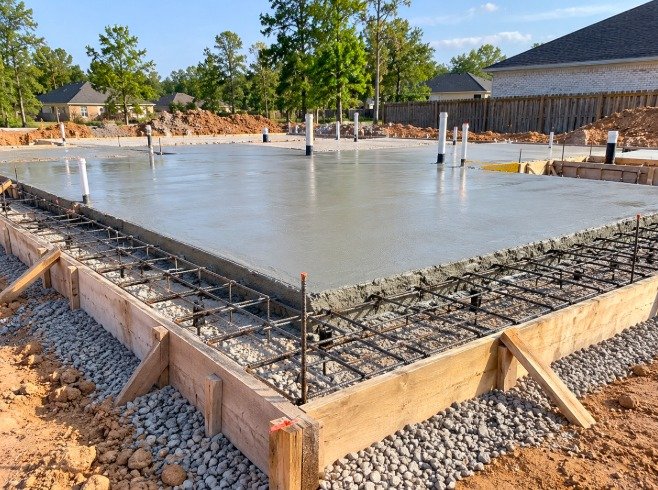
Rebar grid inside wood forms next to a freshly poured reinforced slab

Reinforced Concrete Slabs

Reinforcement can help concrete resist certain stresses and control movement.

Depending on the project, reinforcement may include:

  • Rebar
  • Wire mesh
  • Fiber reinforcement
  • Structural steel systems

The type and amount of reinforcement should be selected based on the slab size, load, soil conditions, and intended use.

Reinforcement is especially common in larger slabs, garage floors, commercial projects, and areas exposed to heavier loads.

Fix It Without Starting Over

Slab Leveling and Resurfacing

Concrete Slab Leveling

A slab can sometimes become uneven when the soil below it settles or shifts.

This may create low spots, raised edges, or uneven transitions.

Depending on the condition, slab leveling may involve lifting, stabilizing, grinding, or replacing the affected section.

The cause of the movement should also be evaluated so the repair addresses more than just the visible surface.

Concrete Slab Resurfacing

Resurfacing may be an option when a slab is structurally stable but has cosmetic surface damage.

A new surface layer can improve the appearance of worn, stained, or lightly damaged concrete.

Resurfacing may also be combined with decorative finishes or coatings.

This can be useful for garage floors, workshop floors, utility areas, and other slabs where the existing concrete remains in good condition underneath.

Choosing the Right Concrete Slab

A small shed pad may require a very different design than a commercial equipment slab or garage floor.

Planning these details before installation helps create a slab that is better suited to the project.

Get A Free Estimate

The correct slab design depends on several factors, including:

  • Intended use
  • Expected weight
  • Soil conditions
  • Drainage
  • Slab dimensions
  • Thickness
  • Reinforcement
  • Surrounding structures
  • Future expansion

Complete Concrete Slab Solutions

Our concrete slab services cover installation, repair, replacement, garage slabs, shed slabs, workshop slabs, equipment pads, HVAC pads, generator pads, hot tub pads, dumpster pads, and parking pads.

Whether you need a small residential pad or a larger commercial slab, proper site preparation and installation are essential.

With the right base, thickness, reinforcement, drainage, and finishing, a concrete slab can provide a strong and dependable foundation for many years.

Slab FAQs

Concrete Slab Questions, Answered

It depends on what the slab will support. Many shed pads, patio slabs, and light-duty residential slabs are about 4 inches thick. Garage slabs and parking pads are often 4 to 6 inches with reinforcement, while workshops, dumpster pads, and commercial slabs may need to be thicker based on equipment and vehicle loads. We recommend the right thickness and reinforcement after reviewing your project and site.

You can usually walk on a new slab after a day or two. Light use, such as setting a small shed or equipment, is often possible after about a week, while heavy vehicles, machinery, and full loads should wait longer. Concrete reaches its full design strength at around 28 days. We give you specific timing and care instructions based on your slab and how it will be used.

Some slabs need a permit and some do not. Slabs that support structures, such as garages, workshops, or buildings, and certain equipment installations often require permits and inspections, while simple flatwork may have fewer requirements. Rules depend on the project and location, so we review your plans during the estimate, explain which permits may apply, and can help you with the paperwork.

Yes. We install concrete pads for hot tubs, standby generators, HVAC condensers, heat pumps, and other equipment. Each pad is sized and reinforced around the equipment's footprint and weight, with room for service access, electrical or plumbing connections, and proper drainage. If you have the manufacturer's specifications, share them with us so we can build the pad to match the equipment requirements.

Slab pricing depends on the size, thickness, reinforcement, site preparation, grading, removal of old concrete, access, and finish. As a general guide, standard slabs often fall around $6 to $14 per square foot, while thicker, heavily reinforced, or commercial slabs cost more. Small pads may have a minimum project price. We provide a free on-site estimate with a clear, detailed written quote.

Book Service

Get Your Concrete Slab Started

Fill out the form below and our team will get back to you quickly with a free estimate.

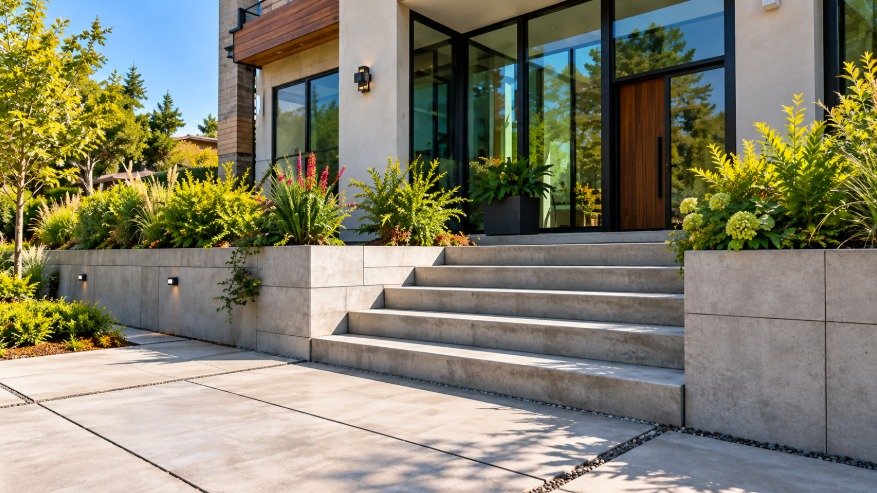
Concrete steps and walkway at a modern Los Angeles home
  • Free Estimates
  • Quick Response
  • Service Throughout Los Angeles
  • Residential & Commercial
  • Licensed, Bonded & Insured