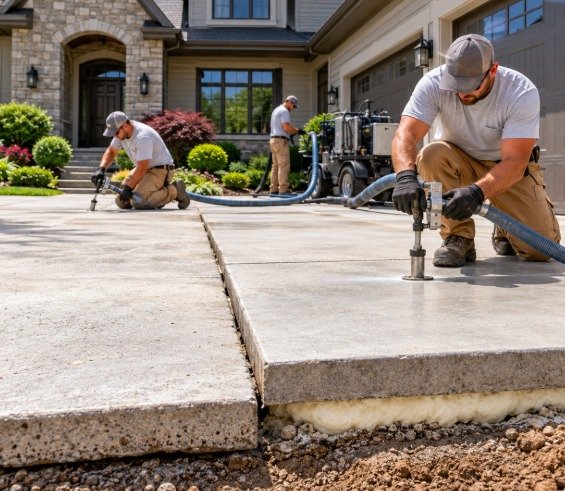
Crew lifting a sunken driveway slab with material injected beneath the concrete

Concrete Leveling Services in Los Angeles

Slab leveling, concrete lifting and raising, sidewalk, driveway, patio, garage, and pool deck leveling, trip hazard correction, void filling, and sunken concrete repair.

Concrete Leveling Services

Fix Sunken, Uneven Concrete Without Tearing It Out

Uneven concrete can create drainage problems, trip hazards, rough transitions, and an overall worn appearance around a property. Concrete leveling is used to correct slabs that have settled, shifted, or developed height differences over time.

This type of service may be suitable for sidewalks, driveways, patios, garage floors, pool decks, walkways, slabs, commercial concrete, and other areas where the surface is still in reasonably good condition but no longer sits at the correct elevation.

Our concrete leveling services include slab leveling, concrete lifting, concrete raising, sidewalk leveling, driveway leveling, patio leveling, garage floor leveling, pool deck leveling, trip hazard correction, and repair of sunken or uneven concrete.

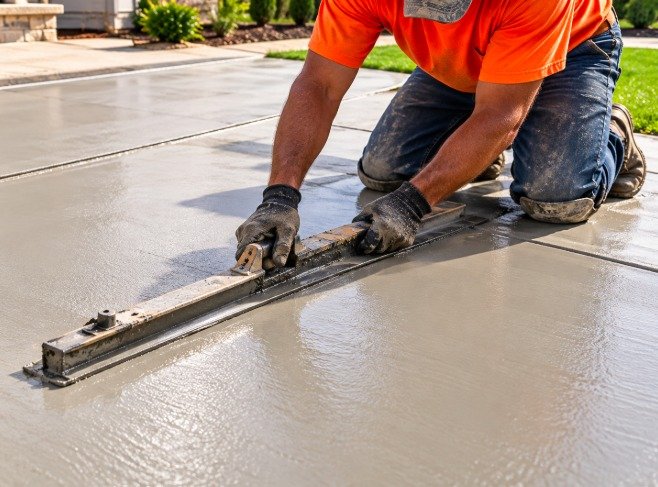
Worker leveling fresh concrete with a screed bar

The Basics

What Leveling Fixes and Why Concrete Moves

Concrete Leveling

Concrete leveling is the process of correcting slabs that no longer sit evenly.

Settlement may occur when the soil or base beneath the concrete loses support.

Common signs include:

  • One slab sitting lower than another
  • Raised or sunken joints
  • Water collecting in low spots
  • Slabs sloping toward a building
  • Uneven walking surfaces
  • Gaps between slabs and structures
  • Trip hazards

The appropriate leveling method depends on the condition of the concrete and the cause of the settlement.
Why Concrete Becomes Uneven

Concrete usually becomes uneven because something underneath the slab has changed.

Common causes include:

  • Soil settlement
  • Poor compaction
  • Erosion
  • Water runoff
  • Tree roots
  • Expansive soil
  • Washout
  • Voids beneath the slab
  • Heavy loads

Understanding the cause is important because the visible slab movement may only be a symptom of a larger issue below the surface.

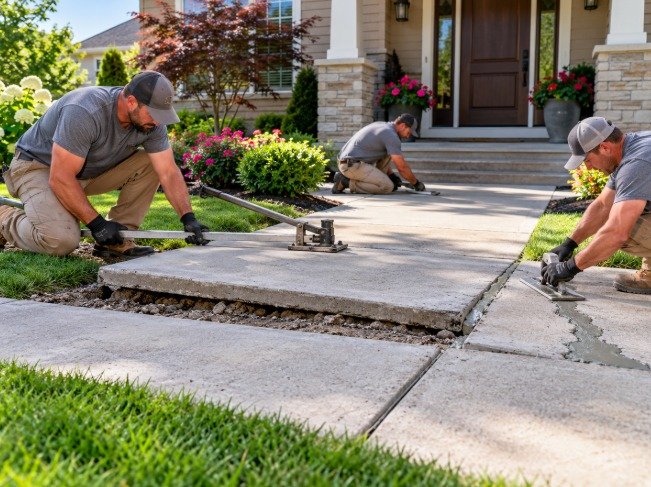
Crew leveling and realigning an uneven concrete walkway slab

Concrete Slab Leveling

Concrete slab leveling can be used on many types of residential and commercial slabs.

The goal is to bring the slab closer to the correct elevation and create a smoother transition with nearby surfaces.

Slab leveling may be suitable for:

  • Sidewalk panels
  • Patio slabs
  • Driveway sections
  • Garage aprons
  • Walkways
  • Small concrete pads

If the slab is severely cracked or structurally damaged, replacement may be more practical.

Concrete Lifting

Concrete lifting is a method used to raise settled slabs.

Depending on the system being used, material may be introduced beneath the concrete to fill voids and lift the slab upward.

Concrete lifting can sometimes restore the surface without full demolition.

Potential applications include:

  • Sidewalks
  • Patios
  • Driveways
  • Pool decks
  • Garage aprons
  • Walkways

The amount of lifting possible depends on the slab condition and surrounding structures.

Concrete Raising

Concrete raising focuses on repositioning a sunken slab closer to its original elevation.

It may help correct:

  • Uneven transitions
  • Low spots
  • Drainage problems
  • Minor trip hazards
  • Settlement near entrances

Raising can be an alternative to replacement when the slab remains structurally stable.

Common Problems

Sunken and Uneven Concrete Repair

Sunken Concrete Repair

Sunken concrete often develops when the supporting soil settles or washes away.

Common areas include:

  • Sidewalks
  • Driveways
  • Patios
  • Steps
  • Pool decks
  • Garage approaches

Sunken sections can create drainage problems and uncomfortable transitions.

Repair may involve lifting, stabilizing, filling voids, or replacing the affected slab.

Uneven Concrete Repair

Uneven concrete can result from one section moving differently than the slabs around it.

This may create:

  • Raised edges
  • Dropped panels
  • Rough transitions
  • Trip hazards
  • Water collection

Repair methods may include:

  • Leveling
  • Grinding
  • Lifting
  • Raising
  • Partial replacement

The best solution depends on the amount of movement and the overall condition of the concrete.

Concrete Repair Services
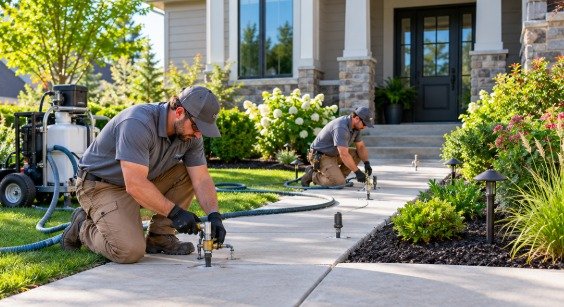
Technicians injecting material to lift a settled front walkway

Sidewalk Leveling

Sidewalks commonly develop uneven sections because of soil movement, root growth, erosion, and settlement.

Sidewalk leveling can help improve:

  • Walking comfort
  • Surface transitions
  • Drainage
  • Accessibility
  • Overall appearance

If one slab is significantly higher than another, leveling or grinding may help reduce the height difference.

Walkway Leveling

Concrete walkways may shift because of roots, erosion, settlement, or water movement.

Leveling can help restore a smoother route between:

  • Driveways
  • Patios
  • Entrances
  • Gardens
  • Pool areas
  • Commercial buildings

The finished surface should maintain proper drainage.

Sidewalk & Walkway Repair

Leveling by Area

Driveway, Patio, Garage, and Pool Deck Leveling

Driveway Leveling

Concrete driveways can develop low or uneven sections after years of vehicle traffic and soil movement.

Driveway leveling may help correct:

  • Sunken panels
  • Uneven joints
  • Low spots
  • Water pooling
  • Transitions near the garage

The slab should be evaluated to determine whether leveling is appropriate or if replacement is necessary.

Driveway Repair

Patio Leveling

Patios can settle over time, especially when soil beneath the slab was not compacted evenly.

This may lead to:

  • Water draining toward the home
  • Low spots
  • Uneven furniture placement
  • Raised joints
  • Trip hazards

Patio leveling can help improve both drainage and usability.

Patio Repair

Garage Floor Leveling

Garage floors may develop uneven areas, depressions, or settlement.

Floor leveling may be needed before:

  • Installing coatings
  • Adding flooring
  • Improving drainage
  • Correcting low spots
  • Creating smoother transitions

The repair method depends on whether the problem is surface-level or caused by slab movement.

Garage Concrete Floors

Garage Apron Leveling

Garage aprons often settle near the transition between the driveway and garage floor.

This can create a drop or uneven lip.

Garage apron leveling may improve:

  • Vehicle access
  • Water drainage
  • Door transitions
  • Surface alignment

If the apron is heavily cracked, replacement may be more practical.

Garage Aprons

Pool Deck Leveling

Uneven pool deck concrete can create noticeable trip hazards around wet areas.

Pool deck leveling may be used to correct:

  • Sunken slabs
  • Raised joints
  • Uneven transitions
  • Low spots
  • Drainage problems

Care should be taken around pool coping, drains, and the pool structure itself.

Pool Deck Repair

Smoother Transitions

Trip Hazard Repair and Grinding

Trip Hazard Repair

Trip hazards often develop where two concrete slabs sit at different elevations.

Repair methods may include:

  • Grinding
  • Leveling
  • Lifting
  • Raising
  • Slab replacement

The best approach depends on how severe the height difference is.

Trip hazard correction is especially important in high-traffic pedestrian areas.

Concrete Grinding for Leveling

Grinding can be useful when one edge is slightly higher than the adjoining slab.

The raised section can be carefully reduced to create a smoother transition.

Grinding may be appropriate for:

  • Sidewalk joints
  • Garage floors
  • Commercial walkways
  • Interior floors
  • Small raised edges

Grinding has limits, so large elevation differences may require another solution.

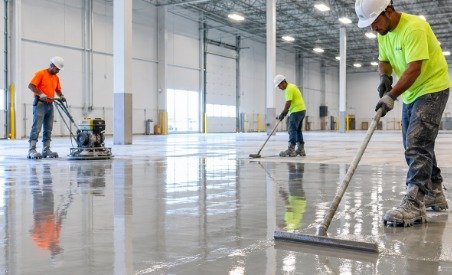
Crew applying and spreading a self-leveling layer across a warehouse concrete floor

Floor Leveling

Concrete floor leveling can help create a flatter surface before the installation of flooring, coatings, equipment, or other finishes.

Leveling may involve:

  • Grinding high spots
  • Filling low areas
  • Applying leveling materials
  • Repairing cracks
  • Resurfacing

Interior floors should also be checked for moisture and structural movement.

Warehouse Floor Leveling

Warehouse floors need smooth transitions for forklifts, carts, and equipment.

Uneven sections can interfere with operations.

Floor leveling may include:

  • Grinding
  • Filling
  • Joint repair
  • Resurfacing

The finished surface should match the expected traffic and load requirements.

Concrete Leveling Before Coatings

Some concrete floors need leveling before epoxy, polyurethane, or other coating systems are applied.

Low spots and rough transitions can affect the finished appearance.

Preparation may include:

  • Grinding
  • Crack repair
  • Filling depressions
  • Surface preparation

A flatter surface can improve the final coating result.

Concrete Leveling Before Flooring Installation

Interior concrete may need to be leveled before installing:

  • Tile
  • Vinyl
  • Laminate
  • Wood flooring
  • Carpet systems

Even small floor variations can create problems with finished flooring.

The leveling system should be appropriate for the planned floor covering.

Concrete Floor Services

Below the Surface

Low Spots, Settlement, and Void Filling

Low Spot Repair

Low spots can collect water or create uneven surfaces.

They may develop on:

  • Driveways
  • Patios
  • Garage floors
  • Pool decks
  • Commercial slabs

Repair may involve filling, resurfacing, lifting, or replacing the affected area.

The underlying cause should also be addressed.

Concrete Settlement Repair

Settlement occurs when the soil beneath concrete compresses or moves.

Signs may include:

  • Slabs pulling away from structures
  • Uneven joints
  • Sunken areas
  • Cracking
  • Poor drainage

Settlement repair may involve stabilizing the base and repositioning the concrete.

Void Filling Under Concrete

Voids may form beneath concrete when soil washes away or settles.

These empty spaces can reduce support and contribute to slab movement.

Void filling may help stabilize the slab and reduce further movement.

The extent of the void should be evaluated before repair.

Water Goes the Right Way

Leveling for Drainage, Patios, Steps, and Doorways

Concrete Leveling for Drainage Problems

Uneven concrete often causes water to flow in the wrong direction.

Leveling may help correct areas where water drains toward:

  • Foundations
  • Garages
  • Entrances
  • Patios
  • Other structures

In some cases, grading or drainage improvements may also be needed.

Concrete Leveling for Driveway Drainage

A sunken driveway section can create puddles or direct water toward the garage.

Leveling may help improve the slope and restore more natural drainage.

If the overall driveway was originally installed with poor grading, more extensive work may be required.

Concrete Leveling for Patios Near the House

Patio slabs should generally direct water away from the home.

If the slab settles toward the foundation, leveling may help improve the slope.

Drainage should always be evaluated as part of the repair.

Concrete Leveling Around Steps

Sunken walkways or landings can create uneven transitions near concrete steps.

Leveling surrounding slabs may help restore a smoother connection.

In some cases, the steps themselves may also need repair.

Concrete Leveling Near Doors

Settlement near doors can create awkward height differences between interior and exterior surfaces.

Concrete leveling may help improve entry transitions where appropriate.

The finished elevation should also maintain proper drainage away from the doorway.

Properties We Serve

Residential, Commercial, Apartment, and HOA Leveling

Residential Concrete Leveling

Residential leveling services may be used for:

  • Driveways
  • Sidewalks
  • Patios
  • Pool decks
  • Walkways
  • Garage aprons
  • Small slabs

Leveling can be a practical way to improve existing concrete without replacing every affected section.

Commercial Concrete Leveling

Commercial properties may require leveling for:

  • Sidewalks
  • Entryways
  • Warehouse floors
  • Loading areas
  • Courtyards
  • Parking surfaces

Commercial projects may involve heavier traffic and larger areas, so the repair method should be selected accordingly.

Commercial Concrete

Apartment & HOA Concrete Leveling

Multifamily properties often have extensive sidewalks and common-area concrete.

Leveling may be needed around:

  • Building entrances
  • Parking areas
  • Courtyards
  • Pool decks
  • Community walkways

Correcting uneven areas can improve access and reduce trip hazards.

Leveling vs Concrete Replacement

Leveling may be appropriate when:

  • The slab is mostly intact
  • Cracking is limited
  • Settlement is moderate
  • The concrete remains structurally sound

Replacement may be better when:

  • The slab is badly broken
  • Cracking is widespread
  • Large sections have failed
  • The surface is severely deteriorated
  • The base requires complete reconstruction
Removal & Replacement

Evaluating the slab condition helps determine the more practical approach.

Choosing a Method

Leveling vs Grinding and Resurfacing

Leveling vs Grinding

Grinding and leveling solve different types of problems.

Grinding is usually best for small raised edges.

Leveling may be more appropriate when an entire slab has sunk.

In some projects, both methods may be used to create smoother transitions.

Leveling vs Resurfacing

Resurfacing changes the top surface of concrete, while leveling focuses on correcting elevation.

If a slab is sunken, resurfacing alone may not solve the underlying issue.

Leveling may be completed first, followed by resurfacing if the surface also needs cosmetic improvement.

Long-Term Results

Repeated Settlement and Maintaining Leveled Concrete

Causes of Repeated Concrete Settlement

If a slab continues to sink after previous repairs, the underlying issue may still be present.

Potential causes include:

  • Poor drainage
  • Ongoing erosion
  • Unstable soil
  • Water leaks
  • Inadequate compaction

Correcting the cause can be just as important as repositioning the slab.

Maintaining Leveled Concrete

After leveling, property owners should monitor:

  • Drainage
  • New cracks
  • Joint condition
  • Soil erosion
  • Water flow

Keeping water away from slab edges can help reduce future settlement.

Choosing the Right Concrete Leveling Solution

Every leveling project should be evaluated individually.

A small sidewalk panel may require a different solution than a large commercial slab.

Get A Free Estimate

Important factors include:

  • Amount of settlement
  • Slab condition
  • Soil condition
  • Drainage
  • Crack severity
  • Surrounding structures
  • Traffic
  • Surface finish

Complete Concrete Leveling Solutions

Our concrete leveling services include slab leveling, concrete lifting, raising, sidewalk leveling, driveway leveling, patio leveling, garage floor leveling, pool deck leveling, trip hazard correction, void stabilization, grinding, and sunken concrete repair.

Whether the problem is a small uneven walkway or a larger settled slab, the goal is to restore a smoother, more functional surface while addressing the conditions that caused the movement.

With proper evaluation and the right leveling method, many existing concrete surfaces can be corrected without complete removal and replacement.

Leveling FAQs

Concrete Leveling Questions, Answered

Small holes are drilled through the sunken slab, and a lifting material is pumped underneath. As it fills the empty spaces below the concrete, it supports the slab and raises it back toward its original height. When the slab is level, the holes are patched. The exact material and process depend on the system used and the condition of the slab and soil underneath.

In many cases, yes. Leveling keeps the existing slab in place, so there is no demolition, hauling, or new pour, which usually means lower cost, less mess, and less time before you can use the area again. It works best when the concrete is mostly intact. Badly broken, crumbling, or heavily cracked slabs are usually better candidates for replacement.

Much sooner than new concrete. Depending on the lifting material and the area, many leveled slabs can handle foot traffic the same day, and driveways are often ready for vehicles shortly after. Grinding repairs can usually be used right away. We tell you exactly when the area is ready based on the method used for your project.

Leveling lasts much longer when the cause of the settlement is addressed. Filling the voids under the slab helps, but if water keeps washing soil away, from downspouts, poor grading, or leaks, the ground can keep moving. That is why we look at drainage during every leveling job and recommend simple fixes that help keep water away from slab edges.

No. Leveling works best on slabs that are mostly intact with limited cracking and moderate settlement. Small raised edges are often better fixed by grinding. Slabs that are broken into many pieces, crumbling, badly heaved by tree roots, or sitting on a failed base usually need to be removed and replaced. We inspect the concrete and explain which option makes the most sense.

Book Service

Get Your Concrete Leveling Started

Fill out the form below and our team will get back to you quickly with a free estimate.

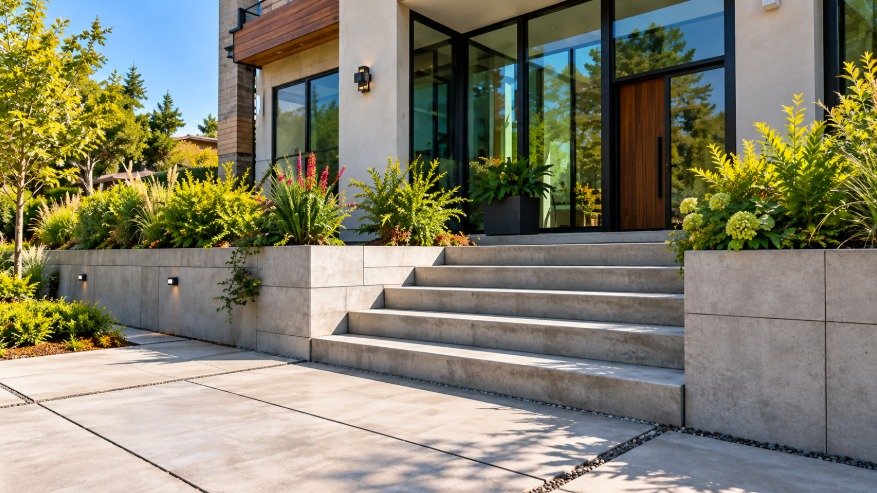
Concrete steps and walkway at a modern Los Angeles home
  • Free Estimates
  • Quick Response
  • Service Throughout Los Angeles
  • Residential & Commercial
  • Licensed, Bonded & Insured