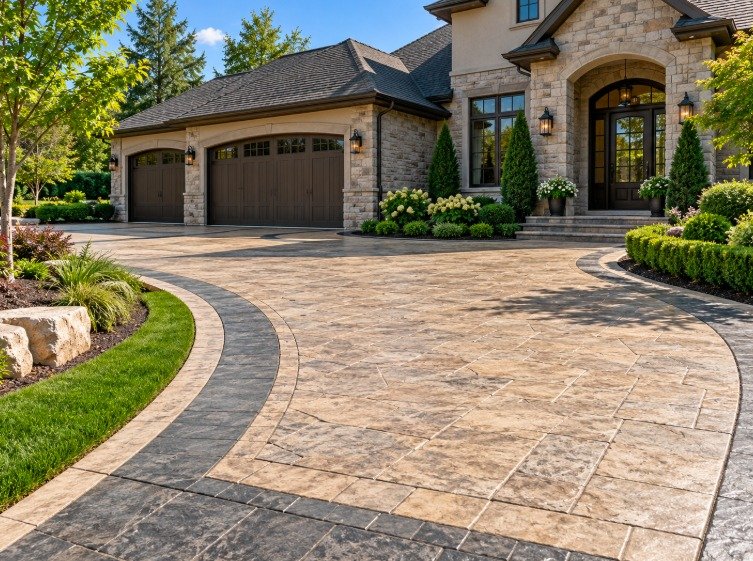
Stamped decorative concrete driveway with a dark contrasting border

Stamped & Decorative Concrete in Los Angeles

Stamped, colored, stained, polished, and exposed aggregate concrete, plus custom textures, patterns, borders, and overlays for patios, driveways, walkways, pool decks, and floors.

Stamped & Decorative Concrete Services

Concrete With Color, Texture, and Character

Stamped and decorative concrete can transform a plain concrete surface into a more distinctive architectural feature. Instead of using concrete only for strength and function, decorative techniques can add color, texture, pattern, and visual character to driveways, patios, walkways, pool decks, entryways, floors, and other areas.

Decorative concrete can be designed to resemble stone, brick, slate, tile, wood, or other materials while maintaining the durability and versatility of concrete. It can also be customized with borders, scoring, staining, exposed aggregate, and different finishing techniques.

Our stamped and decorative concrete services include stamped concrete, colored concrete, stained concrete, polished concrete, exposed aggregate, broom finishes, smooth finishes, salt finishes, custom textures, concrete patterns, and personalized decorative designs.

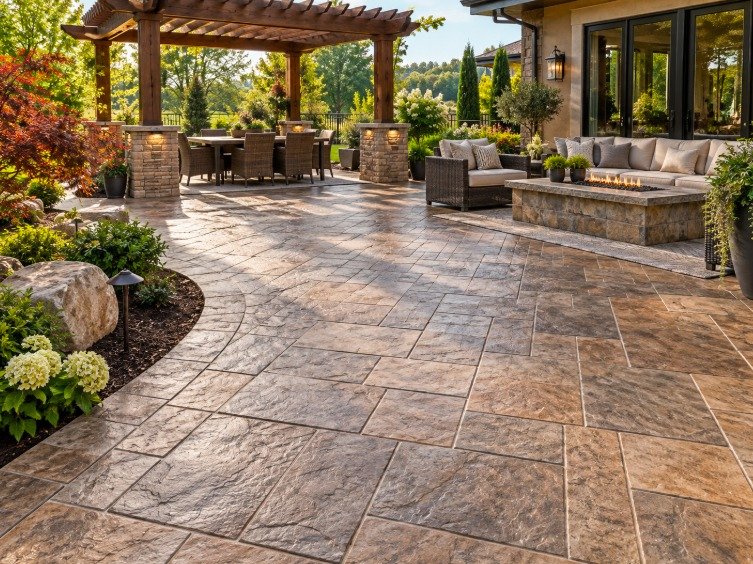
Stamped stone-pattern concrete patio with a pergola, dining set, and fire pit
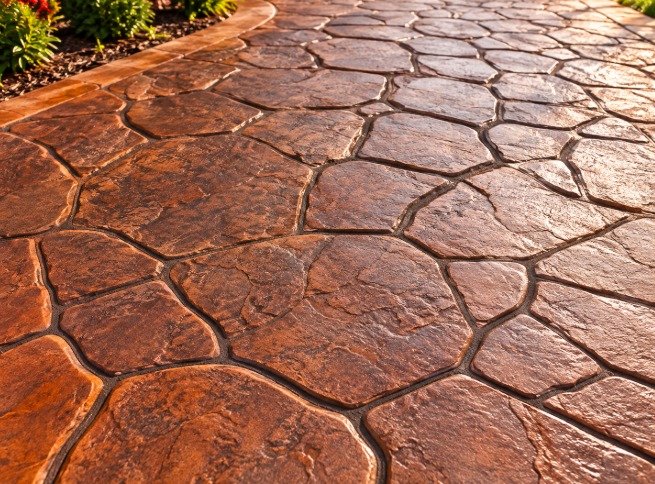
Close-up of stamped concrete with a natural stone pattern and warm color

Stamped Concrete

Stamped concrete is created by pressing textured patterns into freshly placed concrete before it fully hardens.

This process can create the appearance of:

  • Natural stone
  • Flagstone
  • Slate
  • Brick
  • Cobblestone
  • Tile
  • Wood planks
  • Custom geometric designs

Stamped concrete can be used on patios, driveways, walkways, pool decks, porches, courtyards, and other outdoor surfaces.

Color can also be added to create more depth and make the pattern look more natural.

Stamped concrete can cover an entire area or be used selectively as a border, accent, or focal point.

Decorative Concrete

Decorative concrete refers to a wide range of techniques used to improve the appearance of ordinary concrete.

A decorative surface can include:

  • Custom colors
  • Patterns
  • Borders
  • Stamping
  • Staining
  • Exposed aggregate
  • Saw-cut designs
  • Textures
  • Polishing
  • Overlays

Decorative concrete can be designed to complement the exterior of a home, landscaping, architectural style, or nearby hardscape.

It is also commonly used in commercial settings where the appearance of the floor or pavement is part of the overall property design.

Color

Colored and Stained Concrete

Colored Concrete

Colored concrete allows property owners to move beyond standard gray.

Concrete colors may range from subtle earth tones to darker or more dramatic shades.

Popular color families may include:

  • Tan
  • Sand
  • Brown
  • Charcoal
  • Terracotta
  • Red
  • Gray
  • Cream
  • Natural earth tones

Color may be integrated into the concrete or applied through certain surface coloring methods.

Colored concrete can be used on its own or combined with stamping, scoring, borders, or decorative textures.
Stained Concrete

Concrete staining can add rich color while allowing some of the natural variation of the concrete to remain visible.

Stained concrete is often used for:

Staining can create a more layered and organic appearance than a solid surface color.

Depending on the system, colors may range from warm natural tones to more contemporary shades.

The final appearance can vary based on the age, condition, and composition of the concrete.

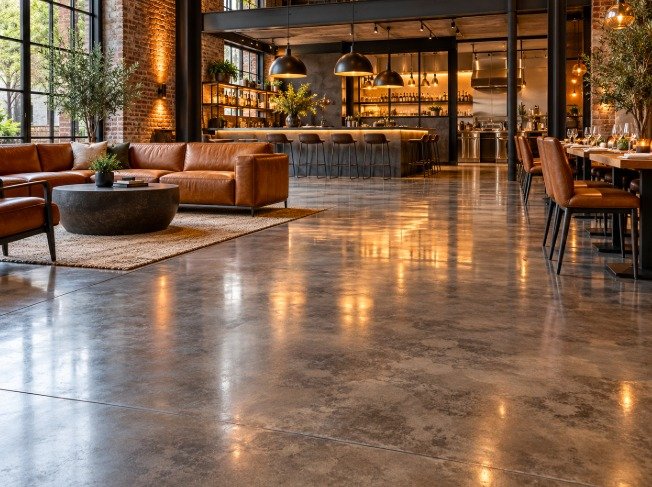
Polished concrete floor in a restaurant and lounge

Polished Concrete

Polished concrete is created by mechanically grinding and refining the surface until the desired level of smoothness and sheen is achieved.

It can be finished with:

  • Low sheen
  • Satin appearance
  • Semi-gloss
  • Higher reflectivity

Polished concrete is commonly used in:

  • Retail spaces
  • Offices
  • Showrooms
  • Basements
  • Warehouses
  • Residential interiors
  • Commercial buildings

Polishing can also expose varying amounts of aggregate, creating a customized appearance.

Color treatments may be added before polishing for a more decorative result. Learn more about our polished concrete floors.

Surface Finishes

Exposed Aggregate, Broom, Smooth, and Salt Finishes

Each finish changes how the surface looks, feels underfoot, and performs outdoors.

Exposed Aggregate Concrete

Exposed aggregate concrete reveals the stones and aggregate within the concrete surface.

The top layer is treated so the natural texture and color of the aggregate become visible.

This finish can be used for:

  • Driveways
  • Patios
  • Walkways
  • Pool decks
  • Entryways
  • Courtyards

Exposed aggregate provides a textured appearance and can create a more natural look than smooth concrete.

The final result depends on the type, size, and color of the aggregate used in the mix.

Broom Finish Concrete

Broom finish concrete is one of the most common textured finishes.

After the concrete is leveled and smoothed, a broom is drawn across the surface to create fine lines.

This creates a practical textured finish that is commonly used for:

  • Sidewalks
  • Driveways
  • Patios
  • Walkways
  • Pool areas
  • Commercial sidewalks

The texture can be light or more pronounced depending on the desired appearance.

Broom finishing is often chosen for areas where a simple and functional surface is preferred.

Smooth Finish Concrete

Smooth finish concrete creates a cleaner and more refined appearance.

The surface is carefully troweled to reduce visible texture.

Smooth finishes may be used for:

  • Interior floors
  • Covered patios
  • Decorative slabs
  • Commercial interiors
  • Entryways
  • Modern architectural spaces

A smooth surface can provide a more contemporary look and can also serve as a base for polishing, staining, or coatings.

Because smooth concrete can become slippery when wet, the location and intended use should be considered before selecting this finish.

Salt Finish Concrete

Salt finish concrete creates a subtle textured surface with small indentations.

During finishing, coarse salt particles are pressed into the surface and later removed, leaving behind a distinctive pattern.

Salt finishes are often used around:

  • Pool decks
  • Patios
  • Walkways
  • Outdoor entertainment areas

The result is a textured appearance that is more decorative than plain concrete but less visually complex than stamped concrete.

Design Details

Textures, Patterns, and Custom Designs

Concrete Texturing

Concrete texturing can be used to create different surface appearances and tactile finishes.

Texture options may include:

  • Light broom patterns
  • Heavy broom finishes
  • Trowel textures
  • Rock textures
  • Slate textures
  • Stone impressions
  • Wood-grain effects
  • Custom tool finishes

The texture can be selected based on appearance, location, and how the surface will be used.

Texturing can also be combined with coloring or staining for a more customized look.

Concrete Patterns

Decorative concrete patterns can help break up large surfaces and add visual structure.

Patterns may be created through:

  • Stamping
  • Saw cutting
  • Scoring
  • Borders
  • Geometric layouts
  • Custom joint designs

Concrete patterns can be simple or highly detailed.

For example, a large patio might include a central pattern with a contrasting border, while a driveway may use saw-cut lines to create a more modern geometric appearance.

Custom Concrete Designs

Custom decorative concrete allows property owners to create a surface that is tailored to the architecture and landscaping of the property.

Custom options may include:

  • Multiple colors
  • Contrasting borders
  • Mixed textures
  • Custom stamps
  • Decorative bands
  • Unique scoring
  • Integrated patterns
  • Personalized layouts

Decorative concrete can be designed to match nearby masonry, stonework, siding, roofing, landscaping, or outdoor furniture.

The goal is to make the concrete feel like a deliberate part of the overall property design.

Where It Works

Decorative Concrete for Patios, Driveways, Walkways, and Pools

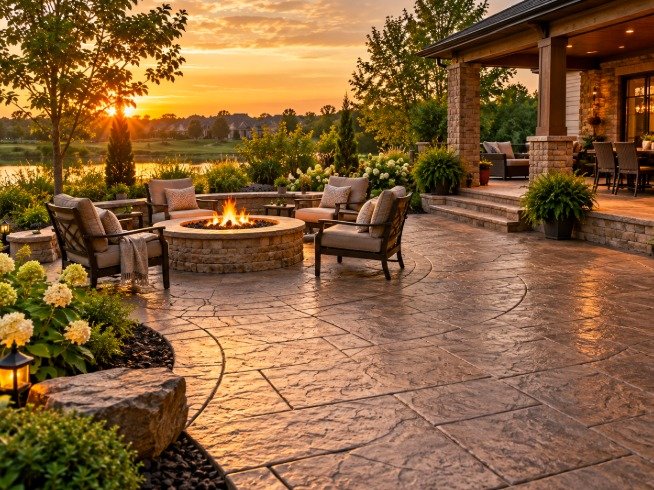
Stamped decorative concrete patio with a fire pit at sunset

Decorative Concrete Patios

Patios are one of the most popular areas for decorative concrete.

A patio can be customized with:

  • Stamped stone patterns
  • Colored concrete
  • Exposed aggregate
  • Decorative borders
  • Custom scoring
  • Stained finishes

Different areas of a large patio can also use different finishes to visually separate dining, seating, cooking, or fire pit areas.

Decorative concrete can help create a more finished outdoor living space.

Concrete Patio Services
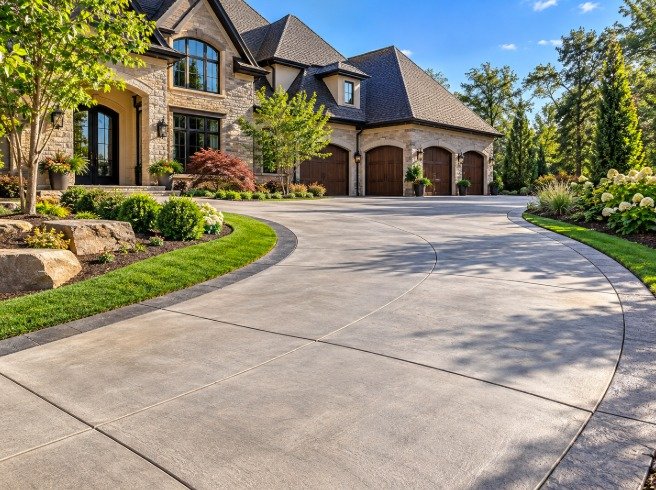
Curved decorative concrete driveway with a dark border

Decorative Concrete Driveways

A decorative driveway can improve curb appeal while maintaining the strength of concrete.

Driveway options may include:

  • Stamped borders
  • Full-surface stamping
  • Colored concrete
  • Exposed aggregate
  • Geometric saw cuts
  • Decorative bands

The design can be coordinated with the home exterior, garage, walkways, and landscaping.

For larger driveways, decorative elements can be used strategically rather than across the entire surface.

Concrete Driveway Services
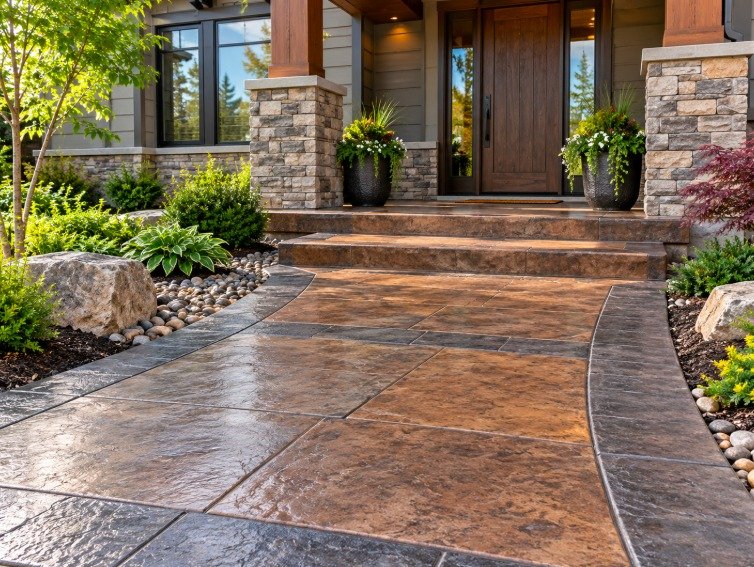
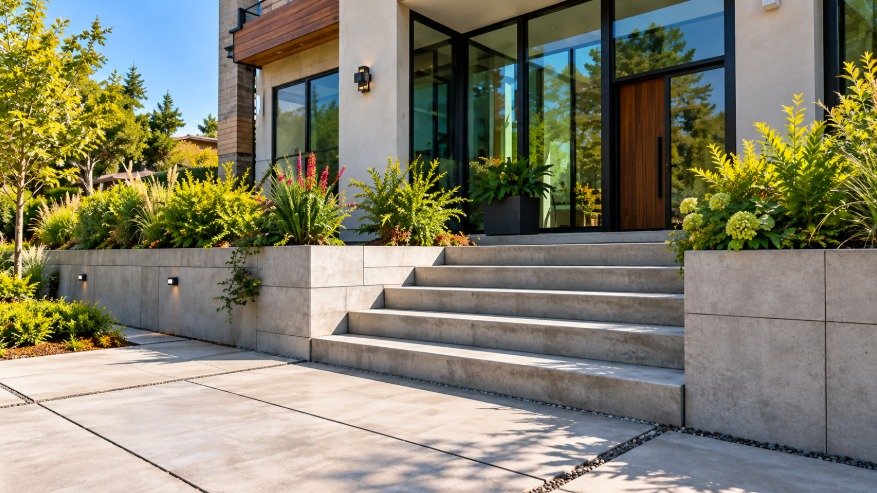
Stamped and colored concrete walkway and steps at a front entry

Decorative Concrete Walkways

Walkways can be designed to provide both function and visual interest.

Decorative walkway options may include:

  • Stamped stone
  • Brick patterns
  • Colored concrete
  • Decorative borders
  • Exposed aggregate
  • Custom curves

A decorative walkway can create a stronger connection between the driveway, front entry, patio, garden, or backyard.

Sidewalk & Walkway Services
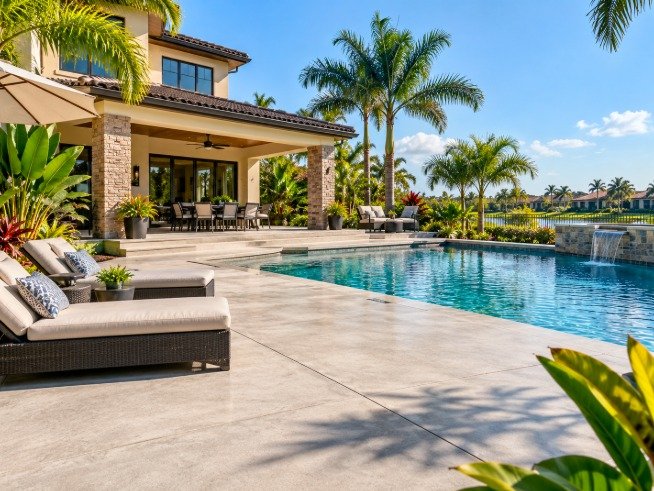
Concrete pool deck with lounge chairs beside a swimming pool

Decorative Pool Decks

Decorative concrete is commonly used around swimming pools because it can create a customized outdoor environment.

Pool deck finishes may include:

  • Textured concrete
  • Stamped concrete
  • Exposed aggregate
  • Colored concrete
  • Decorative borders

The surface should also be selected with regular exposure to water in mind.

Texture can be especially important in pool areas where wet conditions are common.

Pool Concrete Services
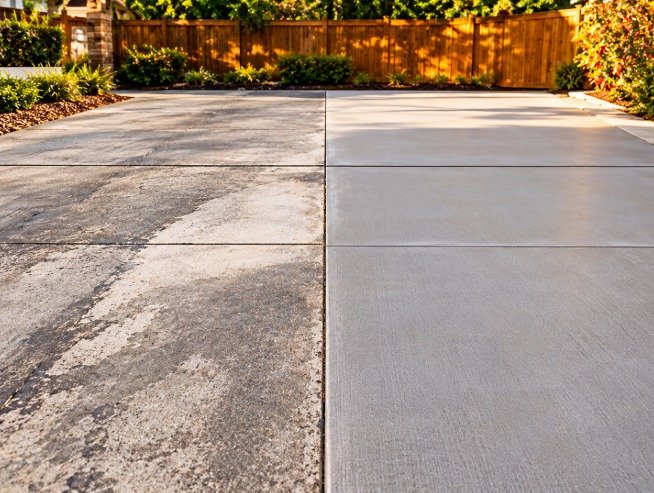
Worn concrete next to a freshly resurfaced section

Decorative Concrete Overlays

Decorative overlays can sometimes be applied over existing concrete when the underlying slab remains stable.

An overlay may help update:

  • Worn patios
  • Older walkways
  • Interior floors
  • Pool decks
  • Commercial floors

Overlays may be textured, colored, stamped, or otherwise customized.

The existing concrete must be properly prepared so the new material can bond correctly.

Finishing Touches

Borders and Saw-Cut Designs

Decorative Concrete Borders

Borders can create visual separation and make a concrete surface look more finished.

They may be used around:

  • Patios
  • Driveways
  • Walkways
  • Pool decks
  • Entryways

Borders can contrast in color, pattern, or texture.

For example, a plain concrete driveway may include a darker stamped border, while a patio may use a contrasting band around the perimeter.

Saw-Cut Decorative Concrete

Saw cutting can be used to create decorative lines and patterns in cured concrete.

These cuts can form:

  • Squares
  • Rectangles
  • Diamonds
  • Large-format tile patterns
  • Geometric designs
  • Custom layouts

Saw-cut patterns work especially well with stained or colored concrete.

The lines can help create the appearance of large tiles or separate different decorative areas.

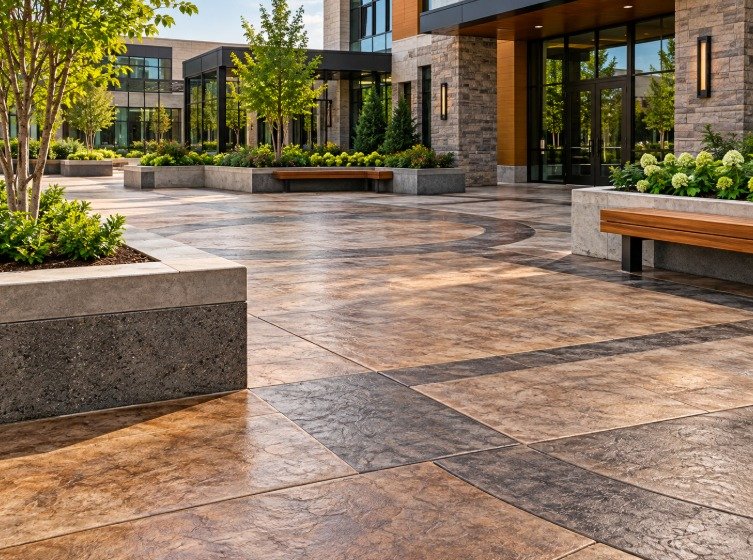
Stamped and colored decorative concrete plaza outside a modern commercial building

Decorative Concrete for Commercial Properties

Decorative concrete can also be used in commercial environments.

Common applications include:

  • Retail entrances
  • Restaurants
  • Office lobbies
  • Courtyards
  • Walkways
  • Showrooms
  • Commercial patios
  • Hospitality properties

Decorative finishes can help reinforce a property's visual identity while maintaining a durable concrete surface.

Maintaining Decorative Concrete

Decorative concrete should be maintained according to the type of finish.

Maintenance may include:

Stamped, colored, stained, polished, and exposed aggregate surfaces may each have different maintenance needs.

Proper care can help preserve both appearance and performance.

Choosing the Right Decorative Concrete Finish

The best decorative concrete option depends on the location, desired appearance, surrounding architecture, and intended use.

A driveway may benefit from a different finish than an interior floor or pool deck.

Evaluating the space before choosing a finish helps create a more appropriate result.

Get A Free Estimate

Factors to consider include:

  • Surface exposure
  • Foot traffic
  • Vehicle traffic
  • Moisture
  • Desired texture
  • Color preferences
  • Maintenance expectations
  • Existing concrete condition

Complete Stamped & Decorative Concrete Solutions

Our stamped and decorative concrete services include stamped concrete, decorative concrete, colored concrete, stained concrete, polished concrete, exposed aggregate, broom finishes, smooth finishes, salt finishes, texturing, custom patterns, overlays, borders, and personalized design options.

Whether the project involves a patio, driveway, walkway, pool deck, floor, or commercial property, decorative concrete can combine function with a more customized appearance.

With thoughtful planning, proper preparation, and the right finishing technique, concrete can become a distinctive part of the property's overall design.

Decorative Concrete FAQs

Stamped and Decorative Concrete Questions, Answered

Stamped and decorative concrete costs more than a standard broom finish because of the extra color, patterns, labor, and sealing involved. As a general guide, decorative concrete often falls around $12 to $25 per square foot, depending on the pattern, number of colors, borders, site preparation, and project size. We provide a free on-site estimate with a clear written quote so you can compare design options.

Most stamped and colored concrete should be resealed about every two to three years, and sometimes sooner on surfaces that get strong sun or heavy traffic. Sealing helps protect the color, brings out the pattern, and makes the surface easier to clean. When the finish starts to look dull or water no longer beads on the surface, it is usually time to reseal.

Stamped concrete has texture from the pattern, but a glossy sealer can make it slick when wet. For patios, pool decks, and walkways, we can add a slip-resistant additive to the sealer and recommend patterns and finishes with more texture. In areas that stay wet, such as around pools, a salt finish, broom finish, or exposed aggregate may also be a good option.

Both are good choices. Stamped concrete is poured as one continuous surface, so there are no individual units to shift or grow weeds between, and it often costs less for large areas. Pavers can be lifted and replaced one at a time if they are damaged. We can walk you through the look, cost, and maintenance of each so you can choose what fits your property.

Often, yes, as long as the existing slab is structurally sound. Options include staining, polishing indoor floors, adding color, or applying a decorative overlay that can be textured or stamped. Badly cracked, heaved, or sinking concrete usually needs repair or replacement first, since an overlay will not fix movement underneath. We inspect the surface and explain which options will work well.

Book Service

Get Your Decorative Concrete Project Started

Fill out the form below and our team will get back to you quickly with a free estimate.

Concrete steps and walkway at a modern Los Angeles home
  • Free Estimates
  • Quick Response
  • Service Throughout Los Angeles
  • Residential & Commercial
  • Licensed, Bonded & Insured