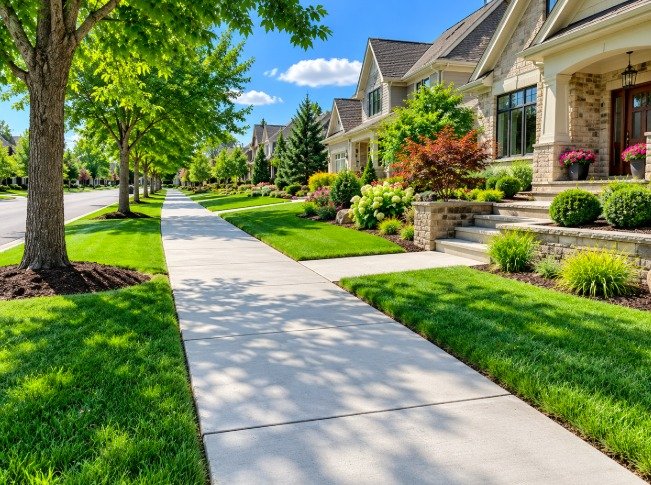
Tree-lined residential concrete sidewalk with a walkway to a front door

Concrete Sidewalk & Walkway Services in Los Angeles

New sidewalks and walkways, repairs, replacement, garden paths, front entry walkways, trip hazard correction, and ADA-accessible concrete for homes and businesses.

Concrete Sidewalk & Walkway Services

Safe, Durable Paths Around Your Property

Concrete sidewalks and walkways provide safe, practical access around homes, businesses, apartment properties, and outdoor spaces. They help connect driveways, entrances, patios, garages, gardens, parking areas, and public access points while also contributing to the overall appearance of a property.

A properly installed walkway should be designed around foot traffic, drainage, surrounding landscaping, elevation changes, and long-term durability. Whether you need a brand-new sidewalk, repairs to damaged concrete, replacement of an aging path, or a decorative walkway with more visual appeal, concrete offers a wide range of options.

Our concrete sidewalk and walkway services include new installation, repair, replacement, front entry walkways, garden paths, cracked sidewalk repair, uneven sidewalk repair, trip hazard correction, and ADA-accessible concrete walkways.

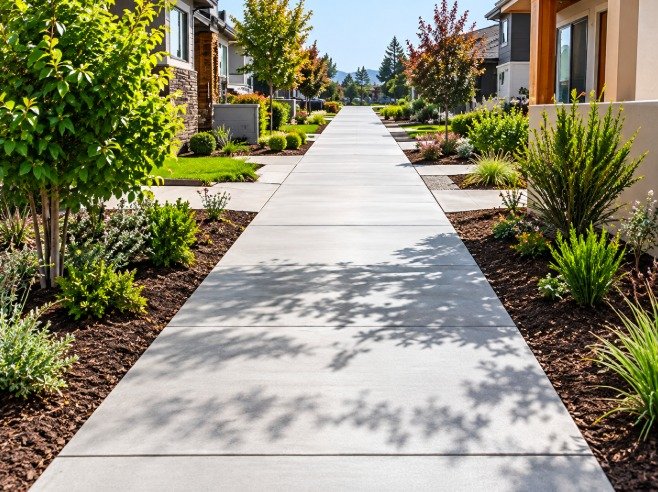
Long concrete walkway lined with plants and landscaping
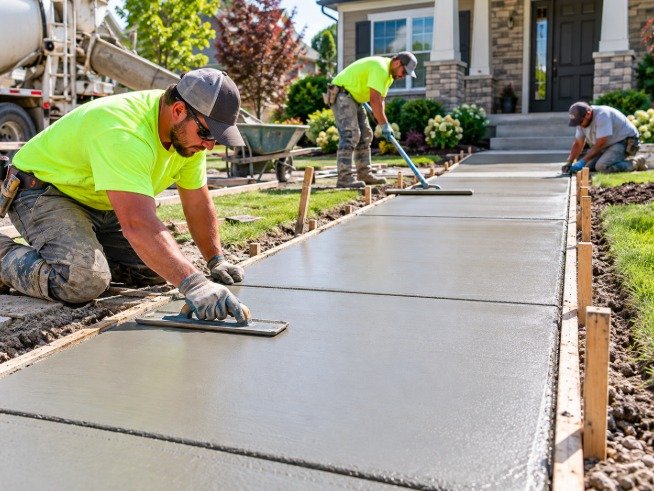
Crew finishing a newly poured concrete sidewalk leading to a house

Concrete Sidewalk Installation

Concrete sidewalk installation begins with careful site preparation and layout planning.

The path should be positioned so it creates a convenient connection between the areas people use most often. This may include the front entrance, driveway, garage, backyard, patio, garden, parking area, or commercial entrance.

The installation process may involve excavation, grading, base preparation, setting forms, reinforcement where appropriate, and planning the correct slope for drainage.

Once the area is ready, concrete is poured, leveled, finished, and allowed to cure.

The final surface can be created with a simple broom finish or customized with decorative options such as stamping, coloring, borders, exposed aggregate, or custom patterns.

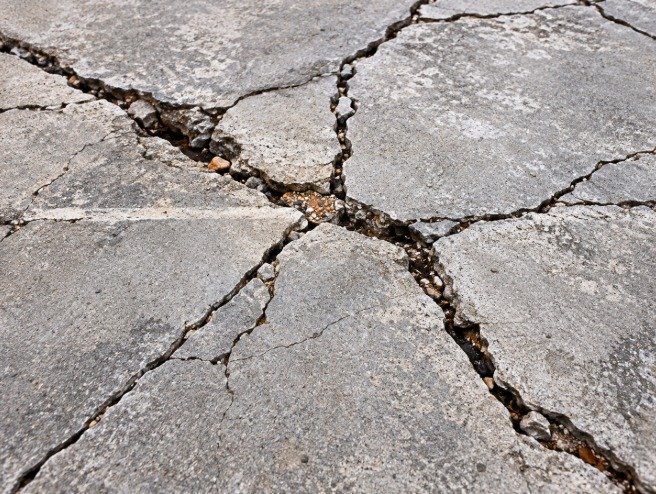
Cracked concrete that needs sidewalk repair

Concrete Sidewalk Repair

Concrete sidewalks can develop damage over time from soil movement, moisture, tree roots, heavy use, weather exposure, or settlement beneath the slab.

Common problems may include:

  • Cracks
  • Broken corners
  • Surface deterioration
  • Uneven joints
  • Chipped edges
  • Small sunken sections
  • Spalling
  • Discoloration
  • Drainage issues

Concrete sidewalk repair can help restore the appearance and usability of damaged areas without necessarily replacing the entire sidewalk.

The appropriate repair method depends on the type and severity of damage.

Minor problems may be addressed with patching, crack repair, or surface restoration, while more severe damage may require replacing individual concrete sections.

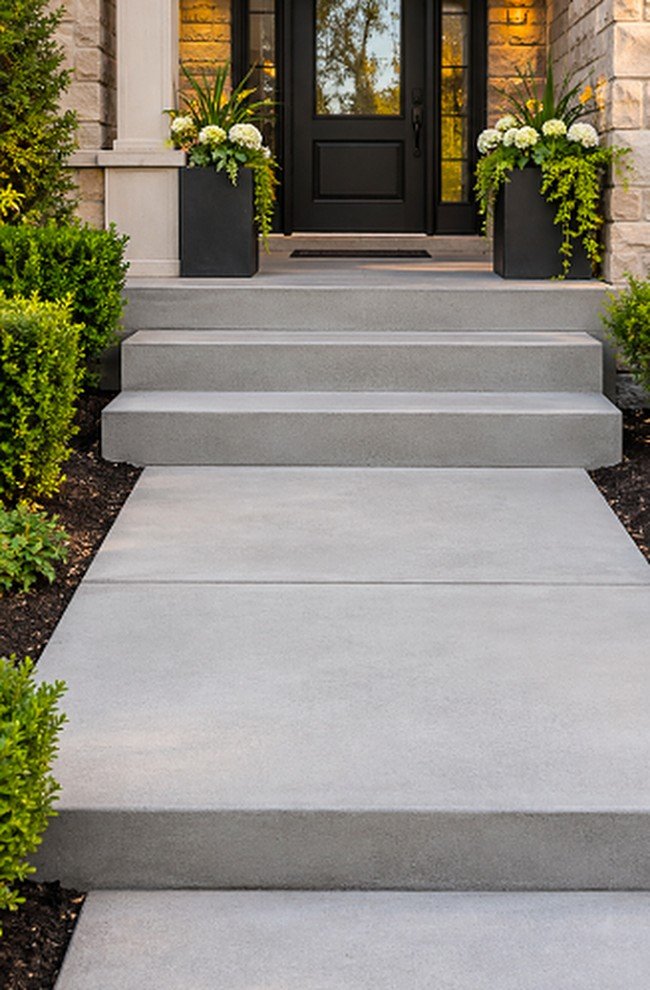
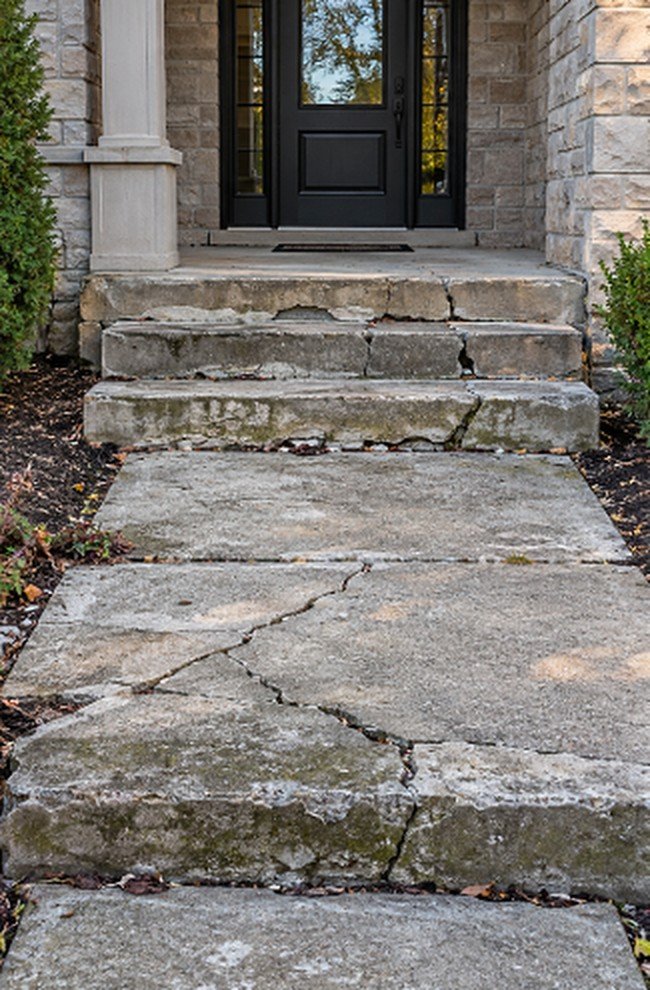
Front walkway and steps after replacement with new concrete Front walkway and steps before replacement, cracked and uneven

Concrete Sidewalk Replacement

When a sidewalk has widespread cracking, significant settlement, severe surface deterioration, or repeated failed repairs, replacement may be the more practical solution.

Concrete sidewalk replacement involves removing damaged sections and preparing the underlying base before new concrete is installed.

Replacement also provides an opportunity to improve the walkway design.

For example, the path may be widened, repositioned, reshaped, or adjusted to improve drainage and accessibility.

Homeowners and property managers may also choose to upgrade a basic sidewalk with decorative concrete, colored finishes, or more attractive transitions to nearby areas.

Concrete Walkways

Concrete walkways can be installed throughout a property to create organized pedestrian routes.

They may connect:

  • Driveways to front doors
  • Front yards to backyards
  • Patios to gardens
  • Garages to homes
  • Parking areas to entrances
  • Pool areas to outdoor living spaces
  • Commercial buildings to sidewalks
  • Apartment buildings to parking lots

A walkway can be straight and simple or curved to create a more natural flow through landscaped areas.

Widths, shapes, finishes, and decorative details can all be customized depending on the property.

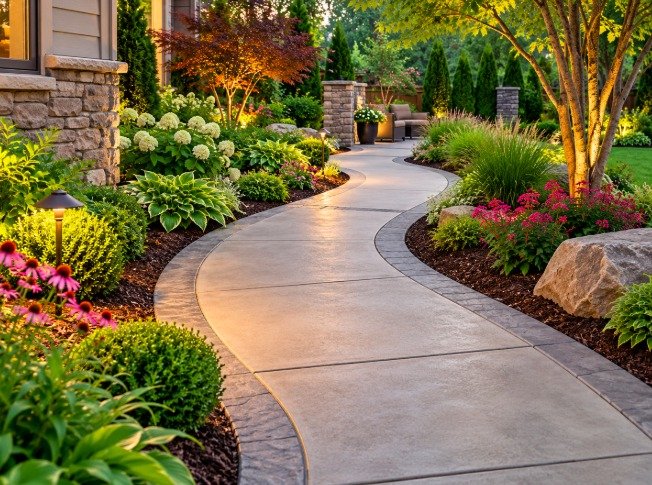
Curved concrete garden path with a decorative border through landscaped beds

Garden Concrete Paths

Concrete garden paths provide a durable way to move through landscaped areas while helping define the layout of the yard.

Paths can be designed to curve around planting beds, trees, fountains, outdoor seating, or other landscape features.

Concrete is especially useful for garden paths because it can be formed into many different shapes.

A garden path may use:

  • Standard broom-finished concrete
  • Stamped concrete
  • Colored concrete
  • Exposed aggregate
  • Decorative borders
  • Textured finishes
  • Custom scoring patterns

A thoughtfully designed garden path can provide both practical access and visual structure within the landscape.

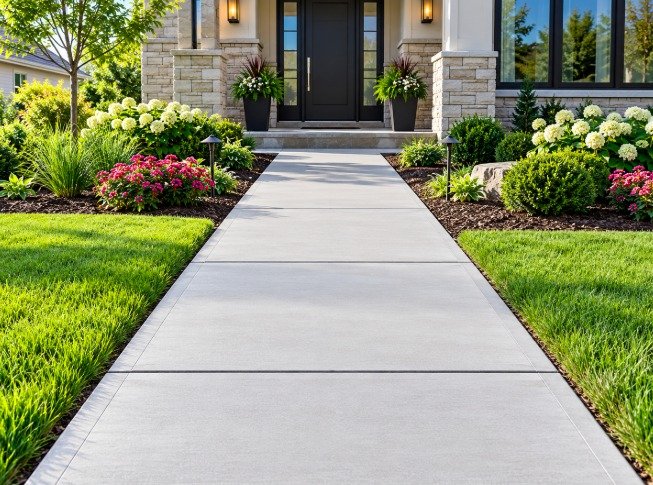
Straight concrete front entry walkway leading to a front door

Front Entry Walkways

The walkway leading to the front door is one of the first parts of a property that visitors notice.

A concrete front entry walkway should provide a comfortable transition between the driveway, sidewalk, porch, or front entrance.

It can be designed to match the architecture of the home and surrounding landscaping.

Front entry walkways may include decorative borders, widened entrance areas, curved designs, stamped patterns, or integrated steps.

The layout should also consider drainage so water does not collect near the front entrance or foundation.

Safer Walking Surfaces

Cracked, Uneven, and Trip Hazard Sidewalk Repair

We look at what is causing the damage before choosing the repair.

Cracked Sidewalk Repair

Cracks are one of the most common forms of sidewalk damage.

Some cracks may develop from normal concrete shrinkage, while others can be caused by soil movement, tree roots, moisture, settlement, heavy loads, or temperature changes.

Cracked sidewalk repair begins by evaluating the size, location, and cause of the crack.

Repair options may include:

  • Crack filling
  • Joint repair
  • Surface patching
  • Resurfacing
  • Section replacement

It is important to determine whether the crack is primarily cosmetic or whether it is connected to movement underneath the concrete.

Repairing cracks can also help reduce water penetration and prevent further deterioration.
Uneven Sidewalk Repair

Uneven concrete sections can develop when one slab rises or sinks relative to another.

This may happen because of:

  • Soil settlement
  • Tree roots
  • Poor drainage
  • Erosion
  • Expansive soil
  • Improper base preparation

Uneven sidewalk sections can create uncomfortable walking surfaces and potential trip hazards.

Depending on the condition, repairs may involve leveling, grinding, lifting, stabilizing, or replacing the affected slab.

The best solution depends on the amount of movement and the condition of the surrounding concrete.

Trip Hazard Repair

Changes in elevation between sidewalk sections can create trip hazards.

Even relatively small height differences may become noticeable in areas with frequent pedestrian traffic.

Trip hazard repair may involve grinding down raised edges, leveling the slab, lifting sunken concrete, or replacing damaged sections.

The goal is to create a smoother transition between adjoining surfaces.

Trip hazard correction is especially important around commercial properties, apartment complexes, entrances, parking areas, public walkways, and frequently used residential paths.

ADA Concrete Walkways

Accessible concrete walkways are designed to improve movement for people using wheelchairs, walkers, strollers, or other mobility devices.

The exact requirements can vary depending on the property and applicable local standards.

Concrete provides a durable surface that can be formed to create accessible paths between parking areas, building entrances, sidewalks, ramps, and other important locations.

ADA-related walkway projects may require attention to factors such as:

  • Walkway width
  • Surface slope
  • Cross slope
  • Changes in elevation
  • Landings
  • Ramp transitions
  • Curb ramps
  • Surface condition
  • Accessible routes

Decorative Concrete Walkways

Concrete walkways do not have to be plain gray surfaces.

Decorative concrete can help a walkway become part of the overall landscape design.

Popular options include:

  • Stamped concrete
  • Colored concrete
  • Exposed aggregate
  • Decorative borders
  • Saw-cut patterns
  • Textured finishes
  • Custom shapes

A decorative walkway can be coordinated with patios, driveways, pool decks, entryways, retaining walls, and other hardscape features.

Stamped Concrete Walkways

Stamped concrete can create the appearance of materials such as natural stone, brick, slate, or pavers while maintaining a poured concrete surface.

Patterns are applied while the concrete is still workable.

Stamped walkways can be especially attractive around front entrances, gardens, patios, and landscaped areas.

Color may also be added to enhance the pattern and create a more customized appearance.

Colored Concrete Walkways

Colored concrete can help walkways blend with the surrounding home and landscape.

Earth tones, gray shades, tan, brown, charcoal, and other colors may be used depending on the design.

Colored concrete can also be combined with stamping, decorative borders, or exposed aggregate.

This allows homeowners to create a walkway that feels more integrated with the rest of the property.

Exposed Aggregate Walkways

Exposed aggregate creates a textured surface by revealing the natural stones within the concrete.

This finish can add visual interest and surface texture.

It works well for:

  • Front entry paths
  • Garden walkways
  • Backyard paths
  • Poolside walkways
  • Decorative sidewalk sections

The appearance may vary depending on the type, size, and color of the aggregate used.

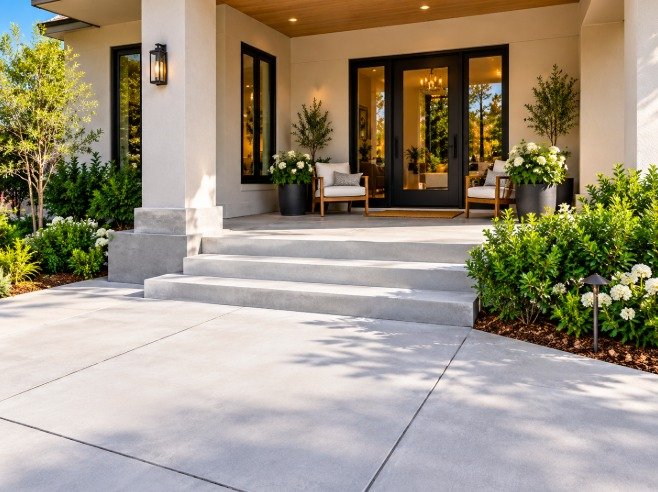
Residential front porch with concrete steps and walkway

Residential Concrete Walkways

Residential walkways can improve both convenience and curb appeal.

Common residential applications include:

  • Front door paths
  • Side yard access
  • Backyard walkways
  • Garage connections
  • Garden paths
  • Patio access
  • Pool paths
  • Trash bin access
  • Shed walkways

Each walkway can be designed around the property layout and how the homeowner uses the space.

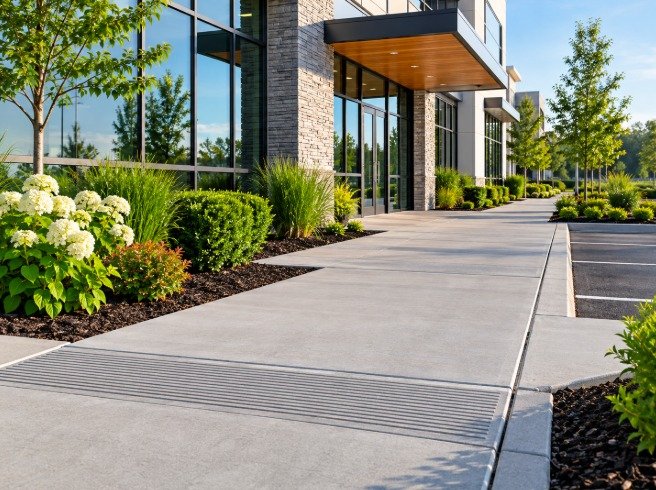
Wide commercial concrete sidewalk along a modern office building

Commercial Concrete Sidewalks

Commercial concrete sidewalks need to support frequent pedestrian traffic while maintaining a professional appearance.

They may be installed around:

  • Retail stores
  • Office buildings
  • Restaurants
  • Warehouses
  • Apartment complexes
  • Medical buildings
  • Schools
  • Industrial properties

Commercial sidewalks may also require curb ramps, accessible routes, reinforced sections, or wider walking areas.

Proper drainage and durable finishing are especially important in high-traffic areas.

Reach More of Your Property

Sidewalk Extensions

A sidewalk or walkway can be extended to improve access to additional parts of the property.

Extensions may be added to connect:

  • New patios
  • Side entrances
  • Parking areas
  • Detached garages
  • Sheds
  • Gardens
  • Pool areas
  • Outdoor kitchens

The new concrete should be planned carefully so it connects smoothly with the existing walkway.

Slope, elevation, joint placement, and drainage should all be considered.

Choosing the Right Sidewalk or Walkway Solution

Every property has different needs.

A new walkway may be ideal for improving access, while an older sidewalk may only require isolated repairs.

In other cases, replacement may be more practical due to widespread deterioration or uneven sections.

A well-planned sidewalk or walkway should provide a comfortable walking surface while fitting naturally into the surrounding property.

Get A Free Estimate

Before deciding on the right solution, it is helpful to consider:

  • Existing concrete condition
  • Foot traffic
  • Drainage
  • Soil movement
  • Tree roots
  • Accessibility
  • Walkway width
  • Landscaping
  • Decorative preferences
  • Future property improvements

Complete Concrete Sidewalk & Walkway Services

Our concrete sidewalk and walkway services cover new installation, repairs, replacement, garden paths, front entry walkways, cracked concrete, uneven sidewalks, trip hazards, accessibility improvements, and decorative finishes.

Whether you need a simple residential walkway or a larger commercial sidewalk system, proper preparation and installation are essential.

With the right layout, drainage, finish, and maintenance, concrete sidewalks and walkways can provide durable and attractive access throughout a property for many years.

Sidewalk & Walkway FAQs

Sidewalk and Walkway Questions, Answered

Most residential walkways and sidewalks take one to a few days to install, depending on length, width, site access, removal of old concrete, and any decorative finish. Stamped or colored walkways usually take a little longer. You can typically walk on new concrete after a day or two, and we will let you know when it is ready for heavier use. We give you a clear schedule before work begins.

Yes. Tree roots are one of the most common causes of raised, cracked, and uneven sidewalks. Depending on how much the slab has moved, we may grind down the raised edge, or remove and replace the damaged section and correct the base underneath. When roots are involved, we recommend talking with an arborist before any root work so the tree stays healthy while the new concrete is protected.

It depends on where the work is. Walkways and paths on your own private property often have simpler requirements, while work on the public sidewalk, curb, or parkway in front of your home usually needs a permit from the city. Requirements change, so we review your project during the estimate, explain which permits may apply, and can help you with the paperwork so the job is done correctly.

Yes. We build and upgrade walkways with attention to width, slope, cross slope, landings, ramp transitions, and curb ramps so they are easier to use for people with wheelchairs, walkers, strollers, and other mobility devices. Exact requirements depend on the property and the local standards that apply, especially for commercial and multifamily buildings, so we review your site and plan the walkway around those requirements.

Pricing depends on the length and width of the walkway, removal of old concrete, grading, site access, reinforcement, and the finish you choose. As a general guide, standard sidewalks and walkways often fall around $6 to $14 per square foot, while stamped, colored, or exposed aggregate walkways cost more. We provide a free on-site estimate with a clear, detailed written quote and no hidden fees.

Book Service

Get Your Sidewalk or Walkway Started

Fill out the form below and our team will get back to you quickly with a free estimate.

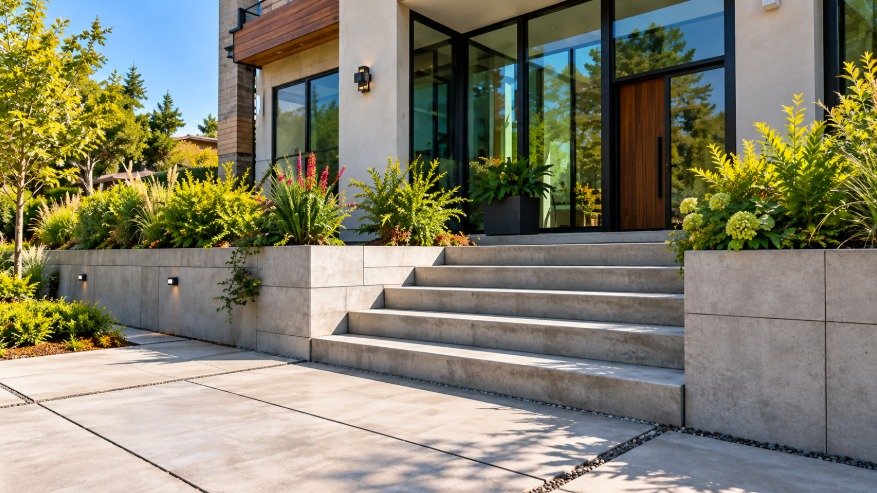
Concrete steps and walkway at a modern Los Angeles home
  • Free Estimates
  • Quick Response
  • Service Throughout Los Angeles
  • Residential & Commercial
  • Licensed, Bonded & Insured