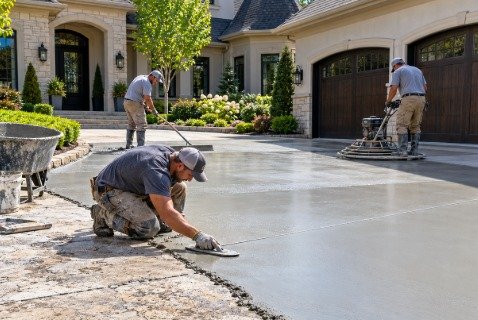
Crew resurfacing a worn concrete driveway in front of a large home

Concrete Restoration Services in Los Angeles

Old concrete restoration, resurfacing, overlays, decorative overlays, sealing, waterproofing, joint sealing, cleaning, pressure washing, and color restoration.

Concrete Restoration Services

Renew Aging Concrete Without Starting Over

Concrete restoration is a practical way to improve the condition, appearance, and performance of aging concrete without always replacing the entire surface. Over time, concrete can become stained, cracked, worn, discolored, rough, or damaged by moisture, weather, heavy use, chemicals, and normal aging.

Restoration focuses on repairing deterioration, renewing the surface, protecting the concrete, and extending its usable life. Depending on the condition of the area, restoration may include resurfacing, overlays, sealing, waterproofing, joint repair, cleaning, pressure washing, and other surface treatments.

Our concrete restoration services include old concrete restoration, concrete resurfacing, concrete overlays, decorative overlays, sealing, waterproofing, joint sealing, concrete cleaning, and pressure washing.

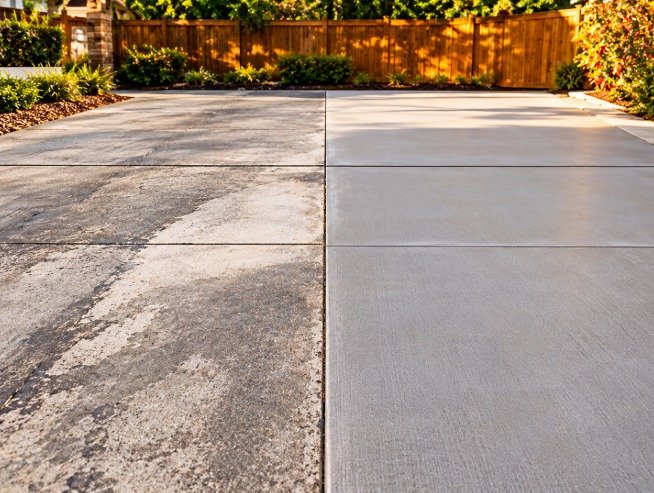
Worn, stained concrete next to a freshly restored section of the same slab

Where It Starts

Concrete Restoration and Old Concrete Restoration

Concrete Restoration

Concrete restoration begins with evaluating the existing surface and determining what type of deterioration is present.

Common issues may include:

  • Cracks
  • Surface wear
  • Staining
  • Discoloration
  • Spalling
  • Scaling
  • Flaking
  • Rough texture
  • Damaged joints
  • Water intrusion

The goal is to preserve as much usable concrete as possible while correcting damaged areas and improving the overall surface.

Restoration can be used on driveways, patios, walkways, pool decks, garage floors, commercial floors, steps, and many other concrete surfaces.
Old Concrete Restoration

Older concrete does not always need to be completely removed.

If the slab remains structurally stable, restoration may be a good option.

Old concrete restoration may include:

  • Cleaning
  • Crack repair
  • Patching
  • Resurfacing
  • Grinding
  • Sealing
  • Decorative treatments

The best approach depends on the age and condition of the concrete.

Restoration can help make worn concrete look cleaner and more consistent while improving surface performance.

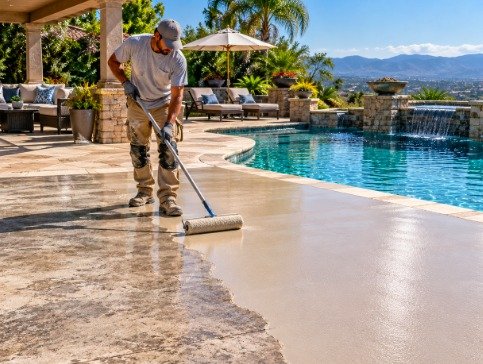
Worker rolling a new resurfacing layer over a worn pool deck

Concrete Resurfacing

Concrete resurfacing involves applying a new surface layer over existing concrete.

It can be used when the slab is still structurally sound but has cosmetic or surface-level deterioration.

Resurfacing may help improve:

  • Worn surfaces
  • Minor cracking
  • Discoloration
  • Rough texture
  • Light scaling
  • Surface imperfections

The existing concrete must be cleaned and prepared properly before resurfacing material is applied.

Resurfacing can also be combined with decorative colors and textures.

Concrete Overlay

A concrete overlay is a new cement-based layer applied over existing concrete.

Overlays can help renew older surfaces without full demolition and replacement.

They may be used on:

  • Patios
  • Driveways
  • Walkways
  • Pool decks
  • Floors
  • Entryways

The overlay can be finished in different ways depending on the desired appearance.

Surface preparation is critical because the new material must bond properly to the existing slab.

Decorative Concrete Overlays

Decorative overlays can restore older concrete while also changing its appearance.

Options may include:

  • Stamped patterns
  • Colored finishes
  • Textured surfaces
  • Custom scoring
  • Stone-look designs
  • Decorative borders

Decorative overlays are often used when homeowners want to update an existing patio, walkway, pool deck, or other visible concrete surface.

The condition of the original slab should be evaluated before applying the overlay.

Stamped & Decorative Concrete

Protection

Sealing, Decorative Sealing, and Waterproofing

Concrete Sealing

Concrete sealing can help protect the surface from moisture, staining, dirt, and certain forms of wear.

Sealers may be used on:

  • Driveways
  • Patios
  • Walkways
  • Pool decks
  • Garage floors
  • Decorative concrete

Different sealers are available depending on the location and desired finish.

Some are designed to penetrate the concrete, while others create a surface film.

The concrete should be clean and dry before sealer is applied.

Decorative Concrete Sealing

Stamped, stained, and colored concrete may benefit from periodic sealing.

Sealing can help maintain appearance and make the surface easier to clean.

It may also enhance the color of some decorative finishes.

Before resealing, the concrete should be inspected for cracks, worn areas, or old sealer that may need to be removed.

Concrete Waterproofing

Concrete is durable, but it can still absorb moisture.

Waterproofing treatments can help reduce water penetration in certain applications.

Concrete waterproofing may be used on:

The appropriate waterproofing method depends on where the water is coming from and how the concrete is constructed.

Drainage and grading may also need to be addressed.

Joints

Joint Sealing and Expansion Joint Restoration

Concrete Joint Sealing

Joints are designed to allow concrete to move without creating uncontrolled cracks.

Over time, joint material can deteriorate or disappear.

Joint sealing may help reduce:

  • Water intrusion
  • Dirt buildup
  • Debris
  • Edge damage

Joint sealing is commonly used in:

The joint should be cleaned and prepared before new sealant is installed.

Expansion Joint Restoration

Expansion and isolation joints can deteriorate from age, traffic, and weather exposure.

Restoration may involve:

  • Removing old joint material
  • Cleaning the joint
  • Repairing damaged edges
  • Installing new sealant

Maintaining these joints can help protect surrounding concrete.

A Cleaner Surface

Cleaning, Pressure Washing, and Stain Removal

Concrete Cleaning

Concrete surfaces can collect dirt, stains, algae, oil, and other contaminants over time.

Concrete cleaning may help restore a cleaner appearance.

Cleaning methods depend on the type of stain and the condition of the surface.

Common areas include:

  • Driveways
  • Patios
  • Pool decks
  • Walkways
  • Garage floors
  • Commercial sidewalks

Cleaning can also be an important first step before sealing or resurfacing.

Pressure Washing Concrete

Pressure washing can remove surface dirt and buildup from many exterior concrete surfaces.

It may be used on:

  • Driveways
  • Sidewalks
  • Patios
  • Pool decks
  • Steps
  • Commercial walkways

The amount of pressure should be appropriate for the condition of the concrete.

Aggressive pressure on weak or deteriorated surfaces can cause additional damage.

Concrete Stain Removal

Certain stains can be difficult to remove from concrete.

Common examples include:

  • Oil
  • Grease
  • Rust
  • Organic stains
  • Dirt
  • Tire marks

The cleaning method should be selected based on the stain and concrete finish.

Decorative concrete may require gentler treatment than standard broom-finished concrete.

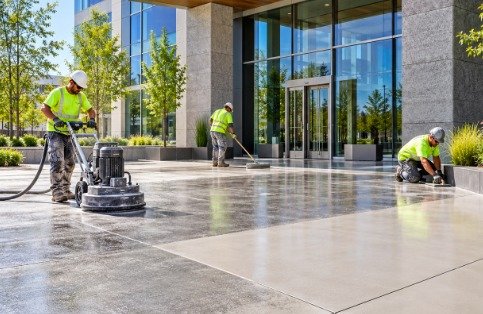
Crew grinding and restoring a large commercial concrete plaza outside an office building

Concrete Surface Preparation

Surface preparation is one of the most important parts of restoration.

Before applying overlays, coatings, sealers, or repair products, the concrete may need:

  • Cleaning
  • Grinding
  • Shot blasting
  • Crack repair
  • Joint repair
  • Removal of loose material

Proper preparation helps new materials bond correctly.

Concrete Grinding

Grinding can be used to restore rough or uneven concrete surfaces.

It may help:

  • Remove coatings
  • Smooth high spots
  • Prepare for overlays
  • Improve floor flatness
  • Remove surface imperfections

Grinding is commonly used on floors, sidewalks, garages, and commercial concrete.

Surface Damage

Crack, Spalling, Scaling, and Flaking Restoration

Concrete Crack Restoration

Cracks should be evaluated before restoration work begins.

Some cracks may be stable, while others may indicate ongoing movement.

Repair options may include:

  • Crack filling
  • Flexible sealants
  • Epoxy repair
  • Patching
  • Partial replacement

Repairing cracks before resurfacing or sealing can improve the finished result.

Concrete Crack Repair

Spalling Concrete Restoration

Spalling occurs when pieces of concrete begin to break away from the surface.

Restoration may involve:

  • Removing loose concrete
  • Cleaning damaged areas
  • Repairing exposed reinforcement
  • Applying repair mortar
  • Resurfacing

The cause of the spalling should also be addressed.

Scaling Concrete Restoration

Scaling is a surface problem where the top layer begins to peel or flake away.

Light scaling may sometimes be restored through resurfacing.

More severe deterioration may require deeper repairs.

After restoration, sealing may help protect the renewed surface.

Flaking Concrete Restoration

Flaking can make concrete appear rough and worn.

The surface may need to be ground, patched, or resurfaced depending on the depth of the damage.

The goal is to remove weak material before applying a new finish.

Finish Restoration

Color, Stamped, Exposed Aggregate, and Polished Concrete

Concrete Color Restoration

Decorative concrete can fade or become uneven in appearance over time.

Color restoration may include:

  • Cleaning
  • Recoloring
  • Staining
  • Tinting
  • Resealing

The best method depends on the original decorative system.

Stamped Concrete Restoration

Stamped concrete can lose color or show surface wear after years of exposure.

Restoration may include:

  • Cleaning
  • Crack repair
  • Color enhancement
  • Resealing
  • Surface repair

Care should be taken to preserve the stamped pattern.

Stamped Concrete

Exposed Aggregate Restoration

Exposed aggregate concrete may become dirty, faded, or worn.

Restoration may include:

  • Cleaning
  • Repairing damaged areas
  • Sealing
  • Surface treatment

The goal is to preserve the exposed stone while improving overall appearance.

Polished Concrete Restoration

Polished concrete can lose sheen in high-traffic areas.

Restoration may involve:

  • Cleaning
  • Regrinding
  • Honing
  • Repolishing
  • Applying protective treatments

This can help restore a more uniform appearance.

Polished Concrete Floors

Restoration by Area

Garage Floor, Patio, Driveway, Pool Deck, and Sidewalk Restoration

Garage Floor Restoration

Garage floors may develop:

  • Oil stains
  • Cracks
  • Surface wear
  • Chipped areas
  • Coating failure

Garage floor restoration may include cleaning, grinding, crack repair, resurfacing, or applying a new coating system.

Garage Concrete Floors

Patio Concrete Restoration

Patios can often be restored instead of replaced.

Restoration may include:

  • Crack repair
  • Cleaning
  • Resurfacing
  • Decorative overlays
  • Sealing
  • Color restoration

This can help update an older patio without changing the entire layout.

Concrete Patio Services

Driveway Concrete Restoration

Driveways may benefit from restoration when damage is mostly at the surface.

Services may include:

  • Cleaning
  • Crack repair
  • Joint repair
  • Resurfacing
  • Sealing

If settlement or structural failure is severe, replacement may still be the better option.

Driveway Resurfacing

Pool Deck Restoration

Pool decks are exposed to water, sun, chemicals, and frequent foot traffic.

Restoration can include:

  • Crack repair
  • Resurfacing
  • Texture renewal
  • Color restoration
  • Sealing

Slip resistance and drainage should be considered during pool deck restoration.

Pool Deck Resurfacing

Sidewalk Restoration

Older sidewalks may have cracks, staining, and surface wear.

Restoration may involve:

  • Grinding
  • Crack repair
  • Cleaning
  • Resurfacing
  • Sealing

Uneven sections may also need leveling or replacement.

Sidewalk Repair

Business Properties

Commercial and Industrial Concrete Restoration

Commercial Concrete Restoration

Commercial concrete can often be restored to extend service life.

Common areas include:

  • Walkways
  • Warehouse floors
  • Parking areas
  • Entryways
  • Courtyards
  • Loading zones

Restoration may help reduce the need for full replacement in areas where the structure remains stable.

Commercial Concrete Services

Industrial Concrete Restoration

Industrial floors may require restoration due to heavy equipment, chemicals, or repeated traffic.

Services may include:

  • Joint repair
  • Crack repair
  • Surface grinding
  • Patching
  • Coating replacement
  • Resurfacing

The repair materials should be selected for the expected working conditions.

Concrete Restoration vs Replacement

Restoration may be appropriate when:

  • The slab remains structurally sound
  • Damage is mostly at the surface
  • Cracks are limited
  • Settlement is minor
  • The base remains stable

Replacement may be better when:

  • Damage is widespread
  • The slab has severe movement
  • Structural cracking is present
  • Settlement affects large areas
  • The base has failed
Removal & Replacement

Evaluating the underlying condition helps determine the most practical solution.

Maintaining Restored Concrete

After restoration, regular maintenance can help preserve the surface.

Maintenance may include:

  • Routine cleaning
  • Joint inspection
  • Crack repair
  • Resealing when needed
  • Removing stains quickly
  • Monitoring drainage

Different finishes may require different maintenance schedules.

Choosing the Right Concrete Restoration Method

A driveway may require a different restoration approach than a polished interior floor or decorative pool deck.

Get A Free Estimate

The best restoration method depends on:

  • Age of the concrete
  • Type of damage
  • Surface condition
  • Existing finish
  • Moisture exposure
  • Traffic
  • Desired appearance

Complete Concrete Restoration Solutions

Our concrete restoration services include old concrete restoration, resurfacing, overlays, decorative overlays, sealing, waterproofing, joint sealing, cleaning, pressure washing, crack repair, surface preparation, and color restoration.

Whether the goal is to refresh an older driveway, renew a patio, restore a pool deck, or improve a commercial floor, restoration can provide a practical alternative to complete replacement.

With proper preparation, repair, cleaning, and protective treatments, aging concrete can often be renewed and kept in service for many additional years.

Restoration FAQs

Concrete Restoration Questions, Answered

Often, yes. If the slab is structurally sound, with a stable base and only minor settlement, restoration can renew the surface for much less than replacement. Stains, wear, discoloration, light scaling, and small cracks are usually good candidates. Concrete with widespread cracking, major movement, or a failed base typically needs replacement. We inspect the surface in person and recommend the most practical option.

A properly installed resurfacing layer or overlay can last many years, and often much longer with good care. How long it lasts depends mostly on surface preparation, the condition of the original slab, traffic, sun exposure, and maintenance such as resealing. Movement or cracking in the concrete underneath can show through over time, which is why we repair cracks and check stability before applying any new surface.

Pressure washing is safe for most sound concrete when the pressure, nozzle, and technique are matched to the surface. Too much pressure can etch the finish, loosen weak or flaking concrete, or damage decorative and sealed surfaces. We adjust the method to the condition and finish of your concrete, and use gentler cleaning for stamped, colored, or exposed aggregate surfaces.

It depends on the surface and sealer. Stamped, colored, and other decorative concrete is often resealed about every two to three years, and sometimes sooner in strong sun or high-traffic areas. Plain exterior concrete can also benefit from periodic sealing. A good sign it is time to reseal is when the surface looks dull or water soaks in instead of beading up.

Restoration usually costs less than full removal and replacement because the existing slab stays in place. Price depends on the size of the area, the amount of repair and preparation needed, and the finish, such as cleaning and sealing, resurfacing, or a decorative overlay. As a general guide, many repair and restoration projects fall around $4 to $12 per square foot. We provide a free on-site estimate.

Book Service

Get Your Restoration Project Started

Fill out the form below and our team will get back to you quickly with a free estimate.

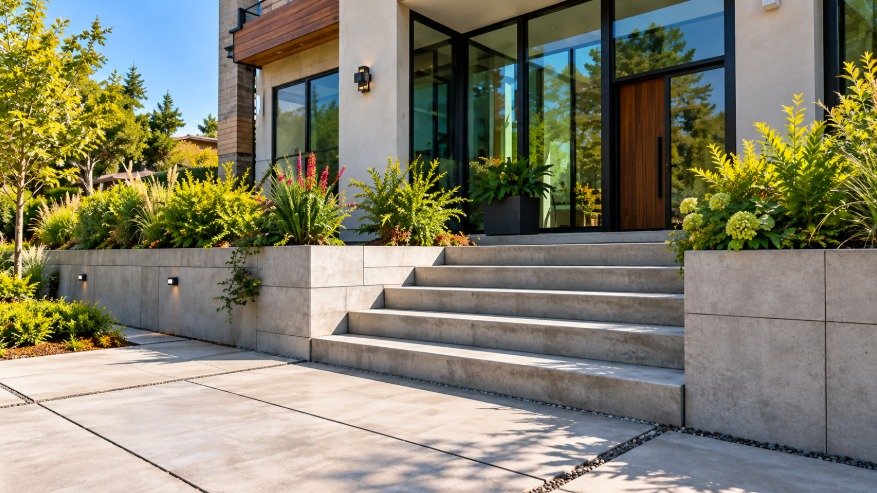
Concrete steps and walkway at a modern Los Angeles home
  • Free Estimates
  • Quick Response
  • Service Throughout Los Angeles
  • Residential & Commercial
  • Licensed, Bonded & Insured